
Wood lousewort
Pedicularis sylvatica
Description
Growing requirements
Wood lousewort (Pedicularis sylvatica) belongs to the Orobanchaceae family and is recognized as a facultative hemiparasite. This botanical feature allows the plant to supplement its nutrient intake by attaching its roots to those of neighboring host plants, which is vital for its survival.
Geographically, the species is native to European grasslands, heathlands, and damp forest edges. It thrives in humid environments and requires soils that remain consistently moist throughout the growing season, showing high sensitivity to even short-term drought stress.
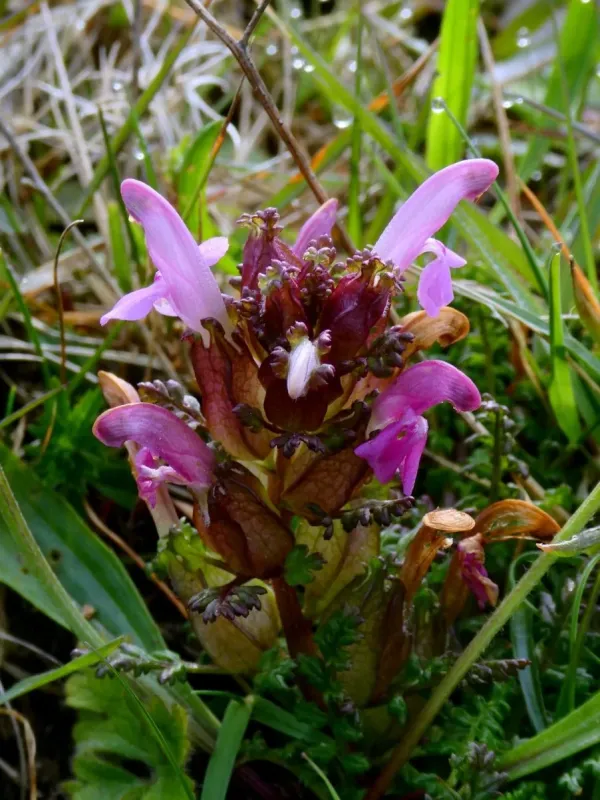
The plant exhibits a rosette structure with feathery foliage and produces short, flowering stems. The tubular flowers are typically pink or magenta, adapted for pollination by bees and other insects that inhabit the same ecosystem.
In agricultural practice, this species is not cultivated as a crop. Its role is primarily ecological, functioning as a bio-indicator for healthy, non-intensively managed grasslands where nutrient levels are stable and the soil has not been subjected to heavy chemical amendments.
Successful growth relies on maintaining complex plant communities where host species are available. Because it lacks a robust independent root system for full nutrient acquisition, it cannot be successfully managed using standard commercial agronomic techniques.
Main diseases and pests
The primary threat to Pedicularis sylvatica is the loss of habitat due to landscape modification. The conversion of traditional meadows into arable land or improved pasture leads to the swift disappearance of this sensitive hemiparasitic species.
Soil nutrient enrichment, particularly nitrogen run-off from nearby crops, is highly detrimental. It encourages the growth of aggressive, competitive grasses that eventually shade out the wood lousewort and deprive it of necessary light and space.
Fungal pathogens represent a significant risk, particularly during periods of stagnant humidity. Leaf rust and various mildews can rapidly compromise the integrity of the plant, often leading to death if the plant is already weakened by competitive stress.
Invertebrate pests that target the flowers and seed pods can significantly reduce recruitment rates. By damaging the reproductive structures, these insects prevent the formation of viable seeds, hindering the ability of the population to expand.
Conservation management is the only viable approach for this species. This involves maintaining traditional, low-intensity grazing or mowing regimes that prevent the accumulation of thick thatch and ensure that the delicate balance of host and parasite remains intact.