
Pedicularis siphonantha
Pedicularis siphonantha
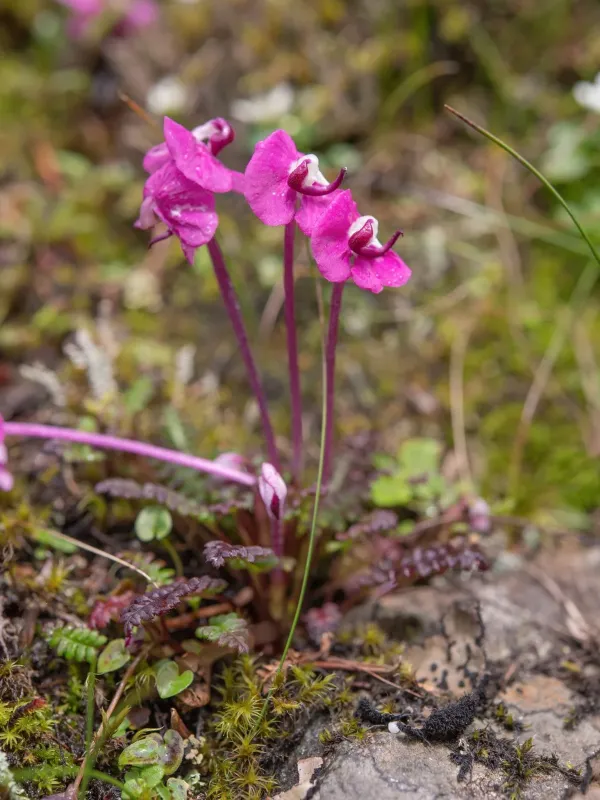
Description
Growing requirements
Pedicularis siphonantha is a perennial herbaceous species belonging to the Orobanchaceae family. As a hemiparasitic plant, it possesses a unique biological mechanism that requires attachment to the roots of host plants to acquire essential water and nutrient resources for survival.
The plant is native to high-altitude regions, particularly the Himalayan alpine meadows and sub-alpine grasslands. It thrives in environments characterized by low average temperatures, intense solar radiation, and specific soil moisture patterns found at extreme elevations.
Cultivation of this species remains a challenge for modern agriculture due to its complex parasitic dependency. Unlike standard crops, it does not respond to conventional fertilizers or uniform planting methods, requiring instead the presence of a natural host plant community.
The botanical structure is defined by its characteristic long, tubular flowers, which are brightly colored to attract specific pollinators in a sparse mountain landscape. The root system is specifically adapted to penetrate the rhizomes of neighboring vegetation to create a parasitic connection.
In terms of agricultural and pharmaceutical utility, Pedicularis siphonantha is primarily utilized in traditional medicine research. Its bioactive compounds are being studied for potential applications in pharmacology, though it remains a wild-harvested or protected species rather than a commercial crop.