
Pedicularis sceptrum-carolinum
Pedicularis sceptrum-carolinum
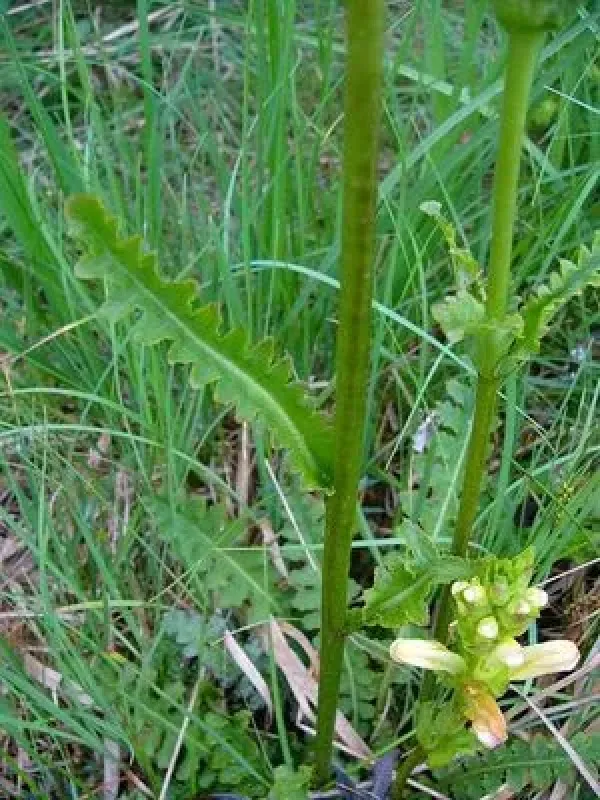
Description
Growing requirements
Pedicularis sceptrum-carolinum, commonly known as the sceptre lousewort, is a perennial herb belonging to the Orobanchaceae family. As a hemiparasite, it possesses green leaves and performs photosynthesis while simultaneously attaching its roots to hosts to obtain water and nutrients.
The plant is widely distributed across the northern regions of Eurasia, including Scandinavia and Northern Asia. Its preferred habitats are wet meadows, marshlands, and shaded areas near forest edges, where the soil moisture levels remain stable throughout the growing season.
Regarding soil requirements, it thrives in rich, organic, and moist environments. It is highly sensitive to changes in hydrology, making it impossible to grow in standard agricultural fields without replicating its complex natural symbiotic ecosystem.
The botanical structure consists of a robust stem reaching up to 80-100 cm, crowned with distinct, large yellow flowers shaped like a sceptre. Its ability to extract nutrients from other species through specialized structures called haustoria is a key evolutionary adaptation.
Cultivation of this species for commercial agricultural use is not documented. It remains primarily an object of interest for ecologists and conservationists who study the biodiversity of wetland and forest flora in temperate climates.
Main diseases and pests
Habitat loss due to land drainage and wetland reclamation is the primary threat to the stability of Pedicularis sceptrum-carolinum populations. Its narrow ecological niche makes it extremely vulnerable to landscape modification.
The plant is susceptible to various fungal pathogens that flourish in damp conditions, particularly those affecting the root-host interface, which can lead to reduced nutrient uptake and potential collapse of the plant.
Insect pests, including aphids and specific larvae that consume the reproductive organs, pose a threat to seed development. Given the plant's limited density in nature, these attacks can significantly impact the population's future recruitment.
Competition from rapidly growing invasive weeds in modified habitats reduces the available space for the lousewort. It lacks the vegetative vigor needed to compete with aggressive grasses in nitrogen-rich soils.
Climate change, manifesting in shifting rainfall patterns and rising temperatures, poses a long-term risk. Pedicularis sceptrum-carolinum relies on consistent moisture, and increasing frequency of drought periods severely impairs its survival and reproductive cycle.