
Beaked lousewort
Pedicularis rostratocapitata
Description
Growing requirements
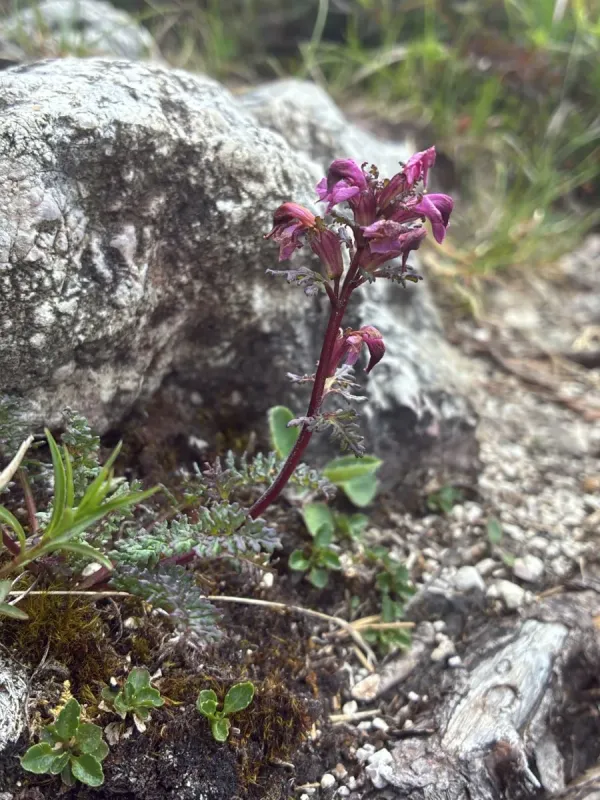
The beaked lousewort (lat. Pedicularis rostratocapitata) is a perennial herbaceous plant belonging to the Orobanchaceae family. It is recognized in botany as a hemiparasitic species with highly specific habitat requirements.
The plant originates from the high-altitude alpine regions of Europe. It thrives in montane meadows and rocky slopes, where it forms symbiotic, yet parasitic, relationships with other surrounding vegetation.
Cultivation requires specialized conditions including well-drained, nutrient-poor soil. Proper aeration and the presence of suitable host plants are essential for the survival and growth of this perennial species.
Climatic requirements involve cool to cold temperatures, high humidity, and intense sunlight. The plant is not suitable for standard agricultural plains due to its strictly alpine, cold-adapted nature.
Botanically, it is characterized by a dense inflorescence and uniquely shaped flowers that resemble a beak. Its ability to extract nutrients from other plants allows it to survive in soil conditions where other species might struggle.
Main diseases and pests
The primary threats include the degradation of alpine habitats and changes in vegetation composition. As a hemiparasite, the loss of host plant diversity significantly jeopardizes the viability of lousewort populations.
Typical threats include fungal root rot caused by poor soil drainage and waterlogging. Additionally, specific herbivores and environmental stressors in high-altitude zones can limit the natural distribution of this rare species.