
Pink lousewort
Pedicularis rosea
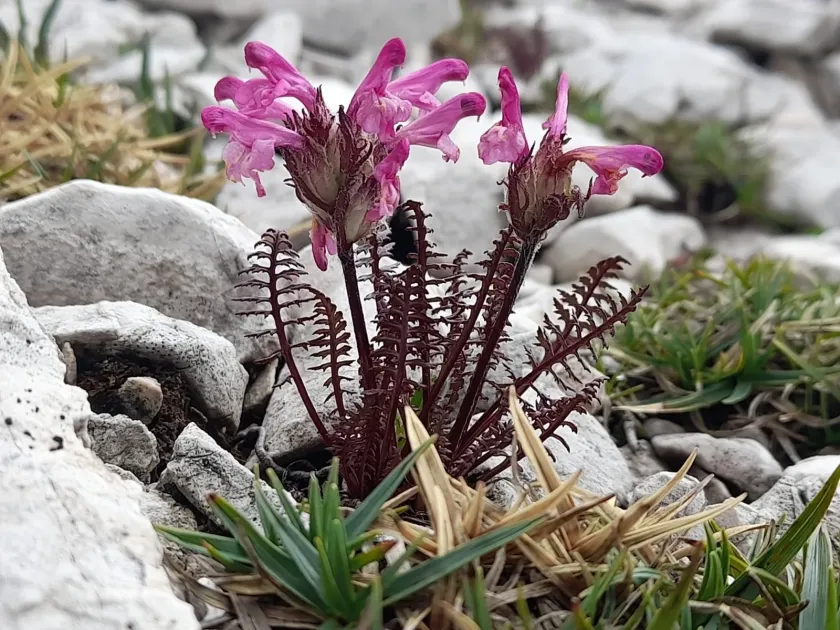
Description
Growing requirements
Pink lousewort (Latin Pedicularis rosea) is a perennial herbaceous plant belonging to the Orobanchaceae family. It is a known semi-parasite, which means it supplements its own photosynthesis by attaching to the root systems of neighboring plants via haustoria.
The native range of this species is primarily focused on the high-altitude regions of the Southern Alps. It thrives in alpine meadows and rocky slopes, where it is well-adapted to the harsh conditions of mountainous environments.
Soil requirements for Pedicularis rosea include well-drained substrates with neutral to slightly acidic pH levels. Crucially, the plant requires a diverse plant community around it to serve as hosts, without which it struggles to reach maturity.
Climate preferences involve high levels of solar radiation, cold nights, and a relatively short growing season. The plant is remarkably resilient to temperature fluctuations typical of high elevations, provided moisture levels remain consistent.
There are no standardized industrial cultivation practices for pink lousewort. Its agricultural value is virtually non-existent, though it remains a subject of study in ecological restoration and botanical conservation projects.
Main diseases and pests
The primary threats to Pedicularis rosea populations are habitat loss and changes in land management practices, such as overgrazing. Since it relies on host plants, any disturbance to the surrounding flora directly threatens the survival of the lousewort.
Fungal diseases, including powdery mildew, may emerge if the plant is exposed to excessive humidity or poor air circulation. While rare in open mountain habitats, these issues can arise in poorly managed collection sites.
Insect pests, such as grasshoppers or larvae, can significantly damage the stems and floral parts of the plant. This loss of biomass restricts the plant's ability to produce seeds, thereby impacting future generations.
Root rot is a significant danger, particularly when moisture levels in the soil become excessive. Damage to the connection points with the host plant effectively kills the lousewort, as it loses its primary nutrient intake pathway.
Conservation strategies emphasize the maintenance of natural plant diversity rather than chemical intervention. Protecting the integrity of the soil structure and limiting human traffic in alpine zones are essential for the health of this species.