
Beaked lousewort
Pedicularis recutita
Description
Growing requirements
Beaked lousewort (Pedicularis recutita) is a perennial herbaceous plant belonging to the Orobanchaceae family. This species is classified as a hemiparasite, meaning it can photosynthesize but relies on host plants to extract water and minerals via specialized root structures known as haustoria.
The natural habitat of this plant is restricted to the mountainous regions of Europe, particularly the Alps and Carpathians. It thrives in humid subalpine meadows and environments with limestone-based, nutrient-rich soils that support its complex nutritional needs through association with host species.
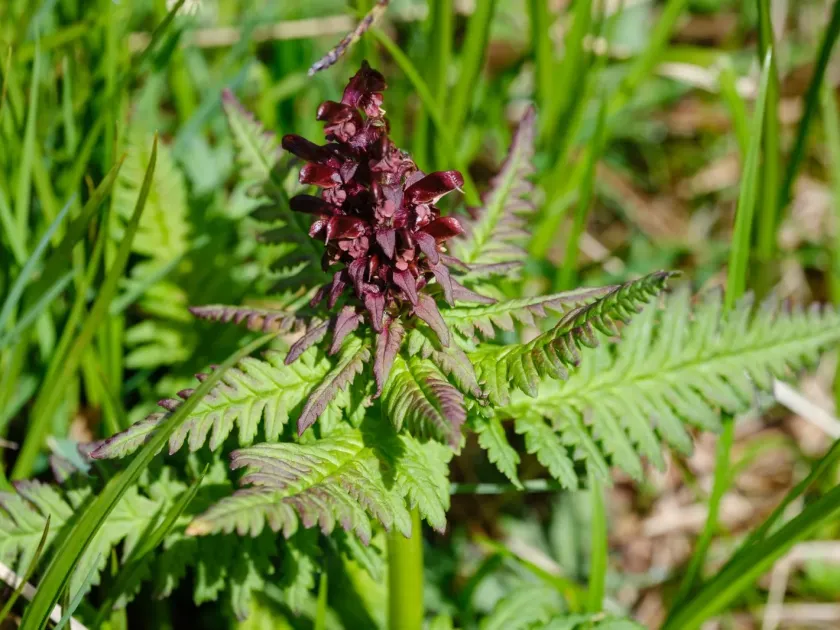
Botanically, Pedicularis recutita is recognized by its dense, brownish-purple inflorescences and pinnately dissected basal leaves. The plant reaches a height of 20-50 cm and is adapted to the harsh conditions of high-altitude ecosystems, characterized by short growing seasons and cold climates.
Regarding agricultural utilization, this plant is not considered a cultivated crop. Its hemiparasitic nature presents significant challenges for domestication, as it requires a stable population of host plants to survive. Consequently, it has no commercial value in modern industrial agriculture.
The plant contains secondary metabolites, which have historically been researched for potential pharmaceutical applications, though no widespread use is established. It remains a wild botanical interest, emphasizing the importance of preserving alpine biodiversity rather than intensive cultivation for commercial gain.