
Pedicularis portenschlagii
Pedicularis portenschlagii
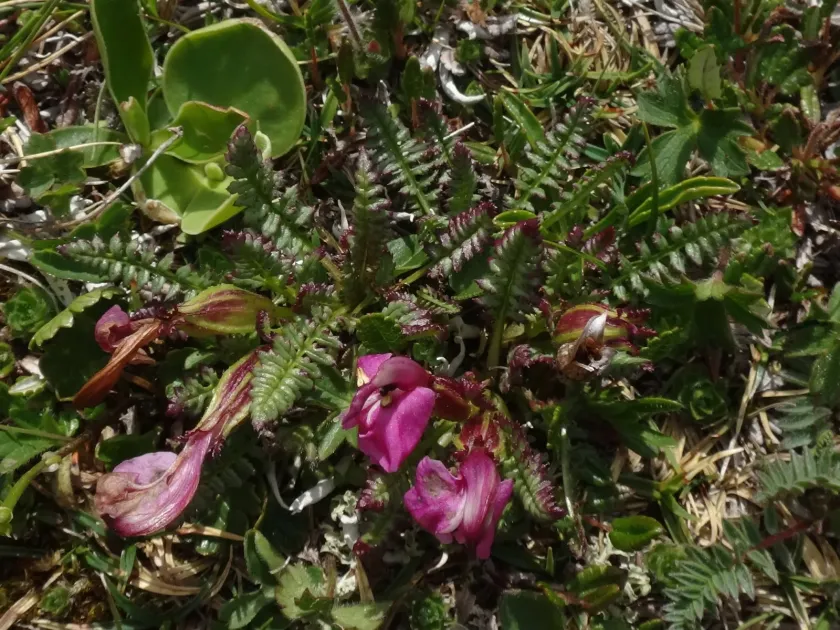
Description
Growing requirements
Pedicularis portenschlagii is an alpine perennial plant belonging to the Orobanchaceae family. It is typically found in high-altitude environments, where it has developed specialized survival mechanisms to endure harsh mountainous climates.
Biologically, it is classified as a hemi-parasite. It uses its root system to attach to the roots of host plants via haustoria, enabling it to supplement its nutritional needs with water and minerals extracted from neighboring vegetation.
Cultivation of this species is extremely demanding. It requires specific ecological conditions that mirror its natural alpine habitat, including cool summer temperatures and a cold, snowy winter period. Such precise requirements make large-scale cultivation impractical.
The ideal growing medium must be well-draining, rocky, or sandy, ensuring excellent aeration around the roots. Even minor waterlogging can be fatal to this species, as it rapidly induces decay in the delicate root architecture.
From an agricultural standpoint, the plant has no commercial use. Its significance lies solely in botanical research and conservation, as it is a specialized component of fragile high-altitude ecosystems that are sensitive to environmental disruption.
Main diseases and pests
The primary threats to this plant are fungal pathogens resulting from poorly drained substrates or high humidity levels. Root rot is the most common cause of failure in attempts to manage the plant in controlled environments.
Additionally, the plant is susceptible to various subterranean pests that target its root system, which is particularly vulnerable due to its reliance on haustorial connections for nutrient uptake.