
Pedicularis orthantha
Pedicularis orthantha
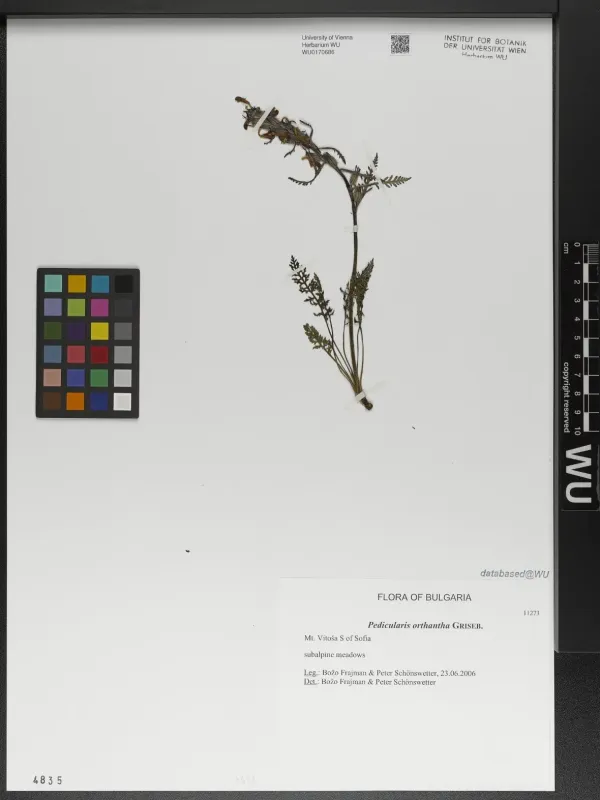
Description
Growing requirements
Pedicularis orthantha belongs to the Orobanchaceae family and is a perennial herbaceous plant species. It is a native inhabitant of high-altitude ecosystems, primarily found in subalpine and alpine meadows, as well as damp mountain slopes.
This species is characterized by a hemiparasitic lifestyle. Its root system develops haustoria, which are specialized attachments that connect to the roots of neighboring plants, allowing it to extract water and nutrients necessary for survival.
The species has strict environmental requirements. It thrives in cool climates with high atmospheric humidity and well-drained soils. High-altitude solar radiation combined with clear mountain air supports the development of its distinctive erect stem structure.
Under natural conditions, Pedicularis orthantha is highly competitive, leveraging the resources of host plants to flourish in nutrient-poor alpine soils. Domestic cultivation is largely impractical due to the complexity of maintaining its unique symbiotic nutrient needs.
Botanically, the plant is noted for its vibrant pink or purple flowers arranged in spike-like inflorescences. Its pinnately dissected leaves serve as an evolutionary adaptation to withstand strong mountain winds while maintaining efficient moisture balance.
Main diseases and pests
The primary threats to the populations of Pedicularis orthantha include climate change, which alters the hydrological cycle of its native alpine habitat. Excessive livestock grazing in high-mountain pastures also negatively impacts its reproductive cycles.
While specific phytopathogenic fungi are uncommon in high-altitude environments, poor drainage can lead to root rot. The plant is generally resistant to many common pests due to the presence of secondary metabolites that serve as chemical defenses.