
Lapland lousewort
Pedicularis lapponica
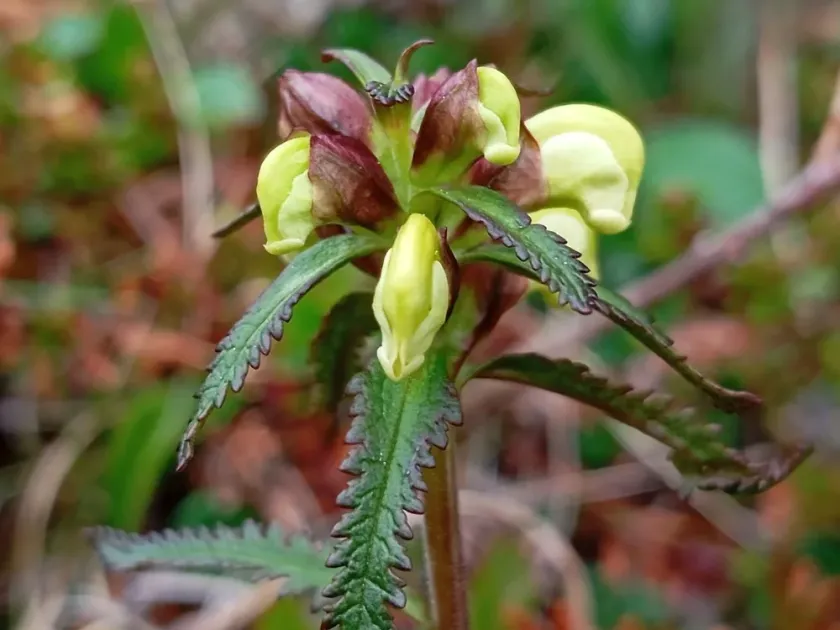
Description
Growing requirements
Lapland lousewort (Pedicularis lapponica) is a perennial herbaceous plant belonging to the Orobanchaceae family. Unlike conventional crops, it is a hemiparasite that derives partial nourishment from the roots of neighboring plants through specialized organs called haustoria.
The native range of this species includes the circumpolar regions of the Northern Hemisphere, specifically arctic and subarctic territories. It is perfectly adapted to survive in harsh, cold climates with short growing seasons, commonly found in tundra biomes.
Botanically, the plant features a basal rosette of leaves and an erect stem topped with clusters of pale yellow flowers. Its root system is specialized, allowing it to penetrate the root structures of host plants without necessarily killing them, which is a key survival strategy.
The environmental requirements for Pedicularis lapponica include cold, moist, acidic soils. It does not tolerate cultivation in standard agricultural fields, making it entirely dependent on stable, undisturbed arctic ecosystems to thrive.
In terms of agricultural significance, it is primarily studied in the context of rangeland ecology. While not a commercial crop, its presence is a marker of certain northern ecosystem types and affects the nutrient cycle of the local plant communities.
Main diseases and pests
The plant is susceptible to various fungal pathogens that flourish in the damp, cool conditions of its habitat. These pathogens can cause stem rot or foliage discoloration.
Insect pests include specialized phytophagous larvae that feed on leaves and reproductive organs during the brief flowering period in the summer months.
Environmental stress caused by global warming is a significant threat, as it alters the traditional soil moisture balance and encourages the expansion of competitive shrub species.
Human activities, such as infrastructure development in arctic zones, pose a direct threat by destroying the fragile tundra soil and the host plants that lousewort relies upon.
Management strategies for this species are limited to conservation and monitoring, as agricultural pest control methods are neither applicable nor economically viable for this wild plant.