
Swamp lousewort
Pedicularis lanceolata
Description
Growing requirements
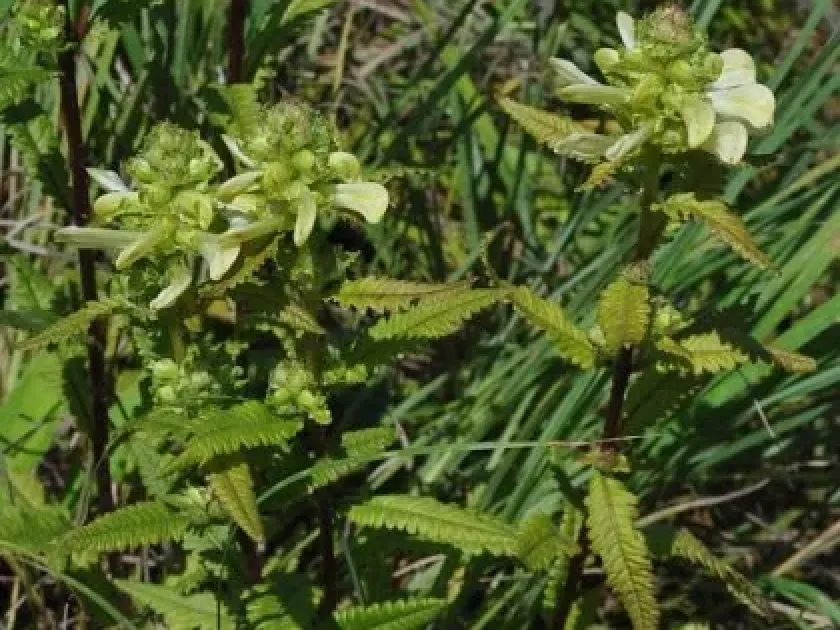
Swamp lousewort (Pedicularis lanceolata) is a perennial herb belonging to the Orobanchaceae family. It is recognized as a hemiparasite, meaning it derives essential nutrients and water from the roots of adjacent plant hosts while maintaining its ability to perform photosynthesis.
The plant is native to North American wetland ecosystems. Its natural distribution is largely restricted to moist meadows, fens, and low-lying marshy habitats that provide stable hydrologic conditions throughout the active growing season.
Environmental requirements for this species are quite strict. It thrives best in open, sun-exposed areas. While it can tolerate partial light shade, full sun exposure is generally preferred to maximize its reproductive output and overall vigor.
Regarding soil preferences, it requires organic-rich substrates, such as muck or peat-based soils. The soil should remain consistently moist throughout the summer, as the species is highly intolerant to prolonged drought or significant shifts in the water table level.
Cultivation of this plant is challenging because it requires specific host species to establish successfully. It is typically found in diverse plant communities where the soil profile remains saturated but aerated enough to prevent root rot.
Main diseases and pests
Habitat loss represents the most significant threat to the survival of swamp lousewort. Large-scale agricultural drainage and land development have destroyed much of the wetlands where this species historically flourished.
Invasive plant species pose a major competitive risk. Many aggressive weeds can outcompete lousewort for limited space and light, particularly if the hydrology of the wetland is disturbed or altered by human activity.
Various insects and herbivores are known to feed on the foliage and flowering structures of the plant. Significant grazing pressure during the flowering period can prevent seed production, threatening the long-term sustainability of local colonies.
Fungal diseases, especially those thrive in high humidity, can affect the leaves and stems. Problems such as powdery mildew or leaf spot infections often arise when plant density is high and air circulation is insufficient.
Agricultural runoff containing fertilizers or chemical pollutants can alter the soil chemistry, disrupting the delicate relationships between the hemiparasite, its hosts, and the surrounding soil microbial community.