
Pedicularis keiskei
Pedicularis keiskei
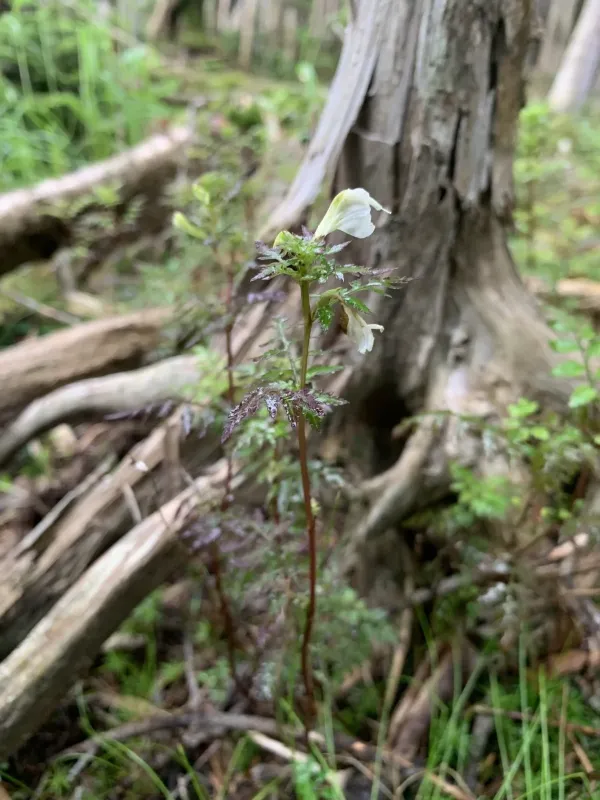
Description
Growing requirements
Pedicularis keiskei, commonly known as Keiske's lousewort, belongs to the Orobanchaceae family. This species is a herbaceous hemi-parasite that attaches to the roots of host plants to supplement its nutrient uptake, utilizing specialized structures called haustoria.
The plant is native to the Far East, primarily found in meadows, forest edges, and mountain slopes. It thrives in temperate climates where soil moisture levels are consistent throughout the active growing season, favoring habitats with high biological diversity.
Optimal growth requires rich, humus-filled soil with adequate drainage. As a hemi-parasite, it cannot be grown in isolation; it requires a compatible host plant species in the immediate vicinity to successfully complete its life cycle and develop fully.
Botanically, the plant features erect stems with finely divided, fern-like leaves. Its inflorescences consist of dense spikes of bilabiate flowers, which have evolved to be pollinated by specific bumblebee species, ensuring reproductive success in the wild.
Economically, Pedicularis keiskei is studied for its chemical composition, specifically its potential pharmacological properties derived from its secondary metabolites. Its cultivation is currently restricted to botanical research and conservation efforts rather than mass agriculture.
Main diseases and pests
Key threats include habitat fragmentation and the loss of host plants due to land-use changes. Because the species depends on a symbiotic relationship with its hosts, environmental degradation is lethal to local populations.
Pathogenic risks include fungal infections like root rot, which are exacerbated by poor soil aeration or waterlogging. Maintaining a proper soil moisture balance is essential to prevent these infections from spreading within the root zone.
Common pests affecting this species include various weevils and aphids that target the leaves and reproductive parts. In some cases, larvae of specific insects can destroy developing seeds before they mature, impacting natural regeneration.
The species is highly sensitive to chemical interventions, especially herbicides. The application of systemic herbicides in nearby agricultural fields often leads to the decline of hemi-parasitic plants due to their complex relationship with the host.
Conservation and management focus on habitat preservation and the mitigation of competitive invasive weeds. Success in cultivating this plant depends on the ability to replicate a natural ecosystem that sustains both the parasite and the host.