
Kaufmann's Lousewort
Pedicularis kaufmannii
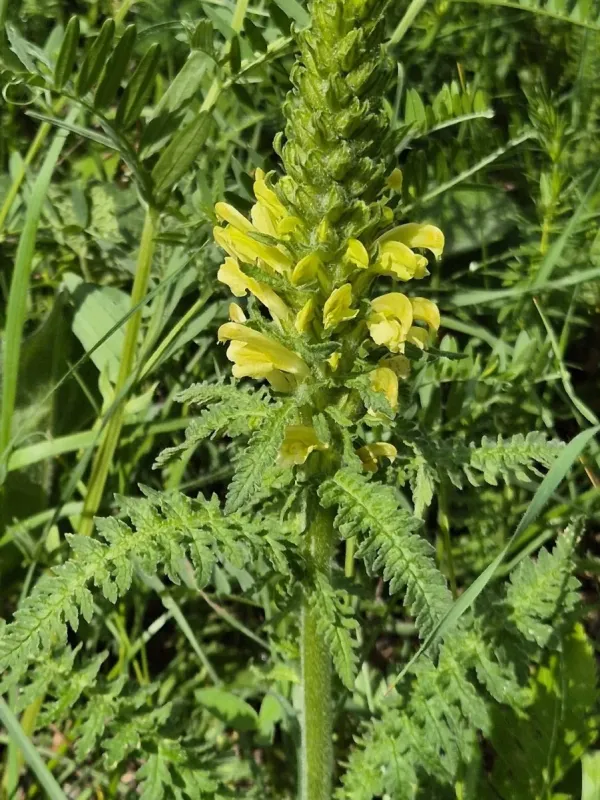
Description
Growing requirements
Kaufmann's Lousewort (Pedicularis kaufmannii) is a perennial herbaceous plant belonging to the broomrape family (Orobanchaceae). It is a hemi-parasitic species that plays a significant role in natural meadow ecosystems throughout its native range.
The species is primarily distributed across the forest-steppe and steppe zones of Eastern Europe. It thrives in humid meadows, forest edges, and areas with dense herbaceous cover, where it relies on surrounding vegetation for its survival.
Biologically, it is distinguished by its haustorial root system, which allows it to attach to the roots of neighboring plants to absorb water and minerals. Despite this parasitism, it retains green leaves and is capable of photosynthesis.
The plant requires nutrient-rich, fertile soils with stable moisture levels. It performs best in environments where the soil is neutral or slightly acidic, and where the natural hydrological balance is maintained throughout the season.
From an agricultural perspective, it is not a traditional crop but rather an important component of wild forage lands. Conservation of its natural habitat is crucial for maintaining the biodiversity of the local meadows.
Main diseases and pests
Fungal pathogens such as powdery mildew pose a risk to the plant, especially during periods of high humidity and poor air circulation within the meadow canopy. This can weaken the plant and reduce its reproductive output.
Insect pests, including various weevils and specialized larvae, often target the flowers and developing fruits. Such damage can significantly affect seed set and the long-term viability of the population.
Agricultural land reclamation and intensive grazing can be devastating for Kaufmann's Lousewort. Mechanical disturbance of the topsoil damages the delicate root connections between the parasite and its host plants.
The use of broad-spectrum herbicides in surrounding areas can indirectly lead to the decline of this species by killing the host plants necessary for the Lousewort's survival.
Climate change and drought episodes represent long-term threats to the stability of the water table, which directly impacts the plant's ability to access the necessary resources from its host species.