
Hairy lousewort
Pedicularis hirsuta
Description
Growing requirements
The Hairy lousewort (Pedicularis hirsuta) is a perennial herbaceous plant belonging to the Orobanchaceae family. It is recognized as a hemiparasite, capable of drawing nutrients from the roots of neighboring plants, which is a strategic survival mechanism in nutrient-poor Arctic soils.
This species is native to the circumpolar regions, primarily thriving in the Arctic tundra of North America, Greenland, and northern Europe. Its range is strictly limited to areas characterized by cold climates and rocky, exposed landscapes.
The plant requires well-drained, sandy or gravelly soil substrates to thrive. It is highly sensitive to soil stagnation and thrives best in locations where it can access host plants, often grasses or sedges, to supplement its nutritional intake.
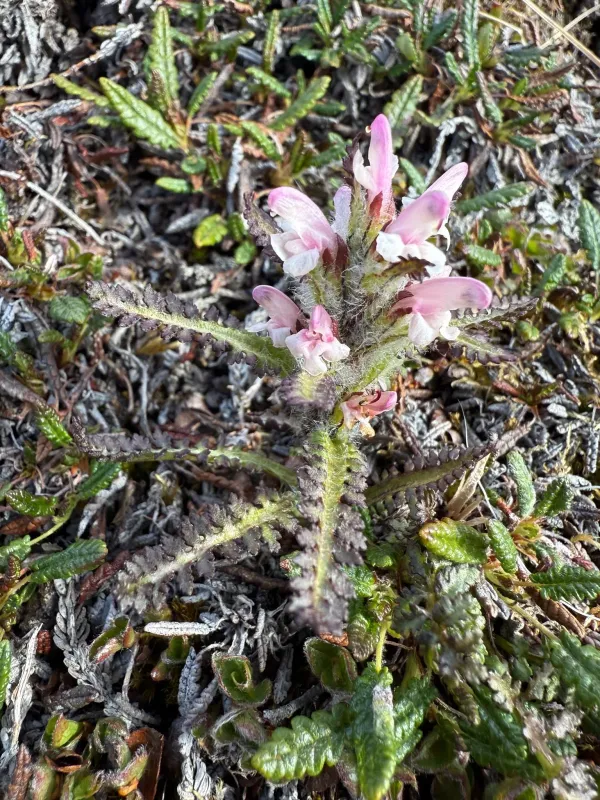
Botanically, Pedicularis hirsuta is distinguished by its hairy, reddish-green stem and its distinctive pink or purplish inflorescence. These features are evolutionary adaptations designed to minimize thermal loss and maximize reproductive success during the very short Arctic summer.
While not a traditional agricultural crop, the species is essential for botanical research and ecological balance in Northern territories. Its presence is often used as a biological marker for the health of alpine and tundra ecosystems.
Main diseases and pests
Hairy lousewort is susceptible to various fungal pathogens that thrive in damp conditions. Rapid climate shifts, leading to unexpected thaws, can trigger fungal growth that compromises the health of the plant population.
Herbivory by local wildlife, such as reindeer or caribou, can impact local populations, especially during the flowering season. While the plant has some capacity for regeneration, overgrazing can lead to localized depletion.
Competition from more aggressive, invasive, or rapidly spreading species is a significant threat as temperatures in the Arctic increase. These encroaching species may outcompete the lousewort for light and essential resources.
Human activities, such as infrastructure development or mining in Arctic regions, can lead to the destruction of the fragile tundra habitat that the Hairy lousewort depends on for its survival.
Pest pressure from specialized insects remains relatively low, but localized outbreaks can occasionally cause significant damage to the floral structures, thereby preventing successful seed production for that growing cycle.