
Hacquet's Lousewort
Pedicularis hacquetii
Description
Growing requirements
Hacquet's Lousewort (Pedicularis hacquetii) is a perennial herbaceous plant belonging to the Orobanchaceae family. Historically placed within the Scrophulariaceae family, taxonomic revisions now categorize it under Orobanchaceae, reflecting its evolutionary biology as a hemiparasitic flowering plant.
The native range of this species is primarily concentrated in the mountainous regions of Central and Eastern Europe, specifically the Alps. It is an indicator species for alpine and subalpine meadows, thriving in environments where cool temperatures and high atmospheric humidity persist throughout the summer season.
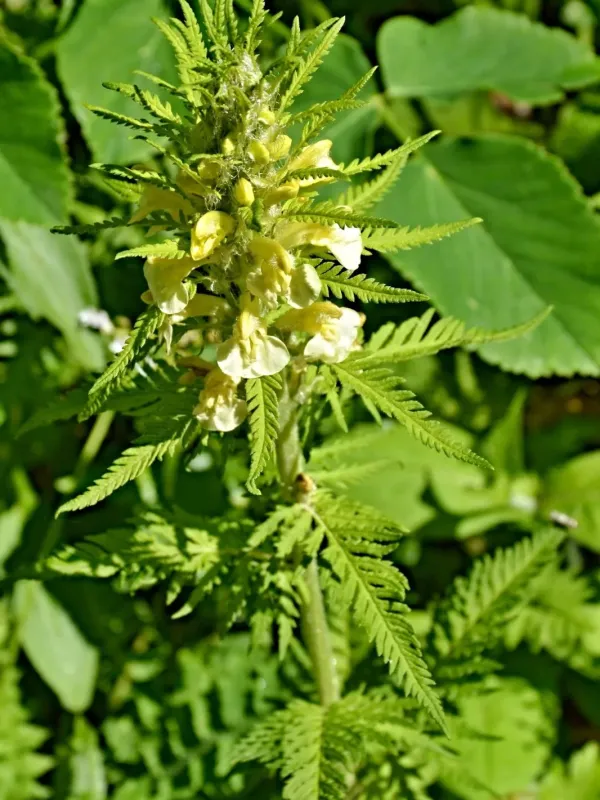
Morphologically, the plant is characterized by a basal rosette of finely divided, fern-like leaves and a stout flowering stem. The inflorescence consists of dense, yellowish flowers with a distinct bilabiate (two-lipped) structure, which serves as a specialized mechanism for pollination by high-altitude insect fauna.
As a hemiparasite, Pedicularis hacquetii utilizes haustoria to extract water and essential nutrients from the root systems of neighboring plants. This biological adaptation is critical for its survival, allowing the plant to maintain metabolic activity even in nutrient-poor alpine soils where root competition is intense.
Regarding environmental requirements, the species demands high light exposure, cool air temperatures, and well-drained substrate. It is highly sensitive to soil compaction and waterlogging, preferring calcareous or rocky slopes where soil aeration is naturally maintained by the terrain's topography and geological composition.