
Elephant's Head
Pedicularis groenlandica
Description
Growing requirements
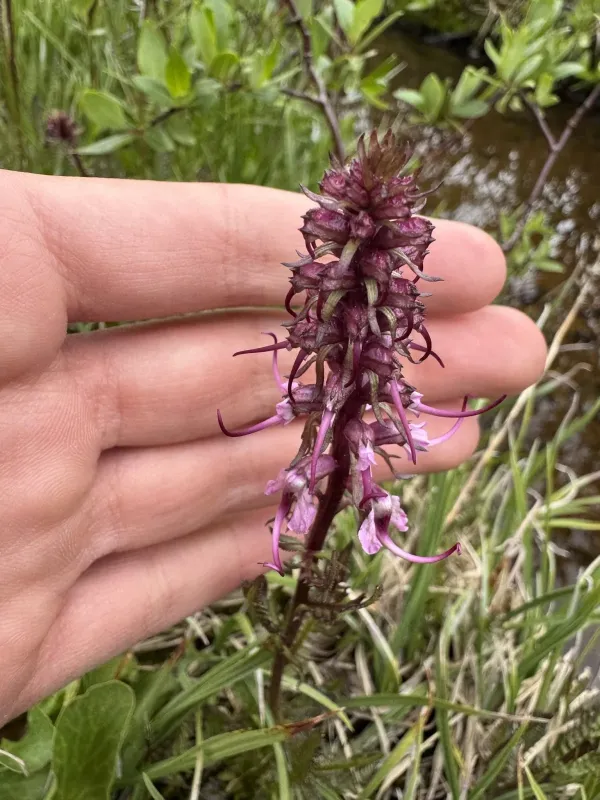
Elephant's Head (Pedicularis groenlandica) is a distinct perennial herbaceous plant belonging to the Orobanchaceae family. It is native to the cold and moist regions of North America, where it thrives in subalpine meadows and alpine marshes.
As a hemiparasitic plant, its physiological structure relies on the root system of host plants to supplement its water and nutrient intake. This unique trait makes it essential to study its interaction with neighboring flora during cultivation.
The culture requires specific environmental conditions, primarily soil that remains consistently saturated with water. It prefers acidic or neutral soils that provide organic matter, mimicking its native peatland and meadow habitats.
Climate adaptability is a hallmark of this species, as it is well-suited to cold-temperate regions with short growing seasons. Proper thermal regulation is achieved through its high cold tolerance during the winter dormant phase.
Cultivation practices should emphasize the maintenance of natural habitat conditions, specifically preventing the soil from drying out and ensuring that host vegetation is present to support the plant's hemiparasitic development.
Main diseases and pests
Major threats to the population of Pedicularis groenlandica include hydrological changes, such as the drainage of wetlands or changes in local watershed drainage patterns.
Fungal pathogens often emerge in stagnant, cold conditions if there is poor drainage or excessive humidity around the root crown, leading to crown rot and stunted development.
Competition from aggressive, non-native grasses can quickly suppress the growth of the plant, as it cannot compete effectively for sunlight or root space in disturbed environments.
Environmental stressors related to climate change, including warmer-than-average summers and reduced snowpack, pose a significant risk to its survival in alpine environments.
Pests are generally limited to small herbivorous insects that can cause minor leaf damage, although they rarely cause fatal destruction unless the plant is already under physiological stress.