
Greek Lousewort
Pedicularis graeca
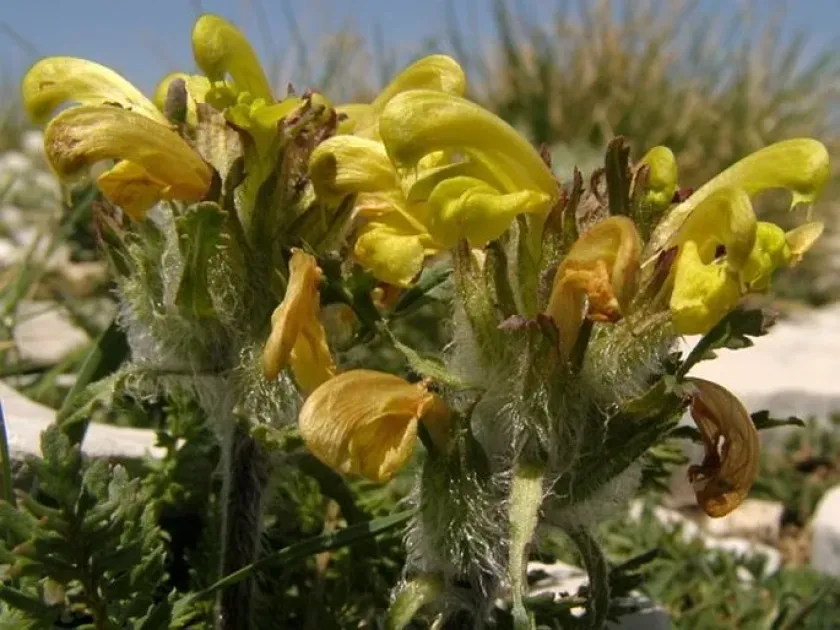
Description
Sowing dates
The Greek lousewort (Pedicularis graeca) belongs to the Orobanchaceae family and is recognized as a hemiparasitic plant. Unlike traditional crops, its sowing requires careful consideration of its parasitic nature, as it relies on a host plant to thrive.
For successful germination, seeds require cold stratification, mirroring the winter conditions of its native Balkan mountain range. Sowing is typically performed in late autumn to ensure that seeds undergo the necessary temperature shifts to break dormancy.
To cultivate this species, it is essential to sow the seeds into a substrate that already contains the root systems of suitable host plants, such as certain alpine grasses. This ensures the seedling can attach its haustoria immediately after sprouting.
Surface sowing is recommended, as the seeds are small and require minimal soil coverage. A thin layer of grit or fine sand can help stabilize the seeds while ensuring adequate light access for the developing embryo.
Proper density management is crucial during the initial stages to prevent overcrowding and ensure that the host plants can adequately support the nutritional needs of the lousewort.
Growing requirements
Pedicularis graeca is an endemic species primarily found in the mountainous areas of Greece and the Balkans. It thrives in subalpine meadows and rocky outcrops where soil is well-drained and mineral-rich.
Soil requirements focus on alkalinity and drainage. The plant prefers calcareous soils and performs poorly in heavy, clay-rich environments that retain excessive moisture or lack oxygen.
The species requires a climate that mimics high-altitude conditions: cool temperatures, clear air, and regular but moderate moisture availability during the spring and early summer growing season.
Sunlight is a key factor; this plant requires open, sunny locations. It does not tolerate shade from taller shrubs or dense canopy cover, which can inhibit its flowering potential.
Consistent host plant health is mandatory. If the host plant is stressed or dies, the Greek lousewort will inevitably perish, making the health of the entire plant community the primary focus of the grower.
Main diseases and pests
The main threats to Pedicularis graeca include root-related fungal diseases triggered by overwatering. Ensuring the substrate does not remain waterlogged during the dormant winter months is vital.
Pests such as aphids and spider mites can infest the foliage, particularly if the plant is grown in greenhouse conditions with poor air circulation or improper temperature controls.
Weed competition is a significant threat, especially during the early development of the seedling, as it lacks the competitive vigor to suppress faster-growing invasive weeds.
Inconsistent host availability poses a threat to the long-term sustainability of the population, often leading to patchy development across the cultivation area.
- Regular monitoring for signs of wilt.
- Maintaining a sterile environment for seed germination.
- Proper selection of compatible, non-invasive host species.