
Pedicularis gracilis
Pedicularis gracilis
Description
Sowing dates
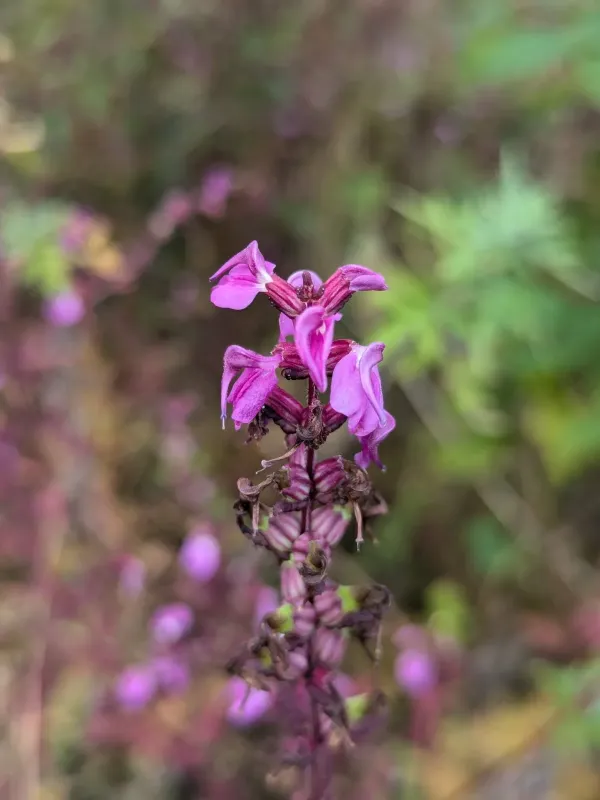
Pedicularis gracilis, known as the slender lousewort, is a herbaceous perennial plant belonging to the Orobanchaceae family. It is distinct due to its hemiparasitic nature, drawing water and minerals from the roots of neighboring plants.
In cultivation, seeds require a period of cold stratification to break dormancy. Sowing is best performed in the late autumn, allowing the seeds to undergo natural temperature fluctuations throughout the winter months.
The seeds are exceptionally small and should be broadcast on the soil surface, requiring only a light covering of sand or fine soil to ensure optimal contact for germination.
The successful establishment of the seedlings depends on the proximity of suitable host plants, which provide the essential connection for the root system to develop fully.
Proper timing of sowing is critical to ensure that germination occurs exactly when conditions in spring are favorable for both the parasite and its host, promoting early synchronization.
Growing requirements
This species thrives in cool, moist, and well-drained environments. It is most commonly found in regions with high humidity but requires protection from waterlogging to prevent root deterioration.
The soil should be moderately acidic and rich in organic matter. Sandy-loam soils are ideal, as they allow for both moisture retention and the necessary oxygen circulation for root health.
While the plant can handle exposure to moderate sunlight, it is best placed in areas where it can receive filtered light, mimicking the conditions of forest edges or subalpine meadows.
Steady moisture levels are essential during the vegetative phase. Drought stress can severely limit the growth of the plant and its ability to maintain its parasitic bond with the host.
Gardeners should avoid heavy mechanical disturbance of the soil, as this can disrupt the delicate haustorial connections established between the lousewort and its neighboring plants.
Main diseases and pests
Root rot, often caused by Pythium or Rhizoctonia species, is the most common threat when the plant is grown in soil with poor drainage or during extended rainy periods.
Foliar pests, including aphids and thrips, can cause significant damage during the blooming season, as they target the nutrient-rich tissues of the inflorescence.
Competition from fast-growing weeds is a primary concern for the survival of Pedicularis gracilis in the early stages, as it is relatively slow to mature compared to invasive species.
To maintain a healthy crop, growers should implement a strict monitoring schedule, focusing on the early detection of localized infestations or fungal spots on the leaves.
Management of the host plant population is also a key factor; maintaining a stable and healthy host environment ensures that the lousewort remains resilient against external environmental stressors.