
Pedicularis friderici-augusti
Pedicularis friderici-augusti
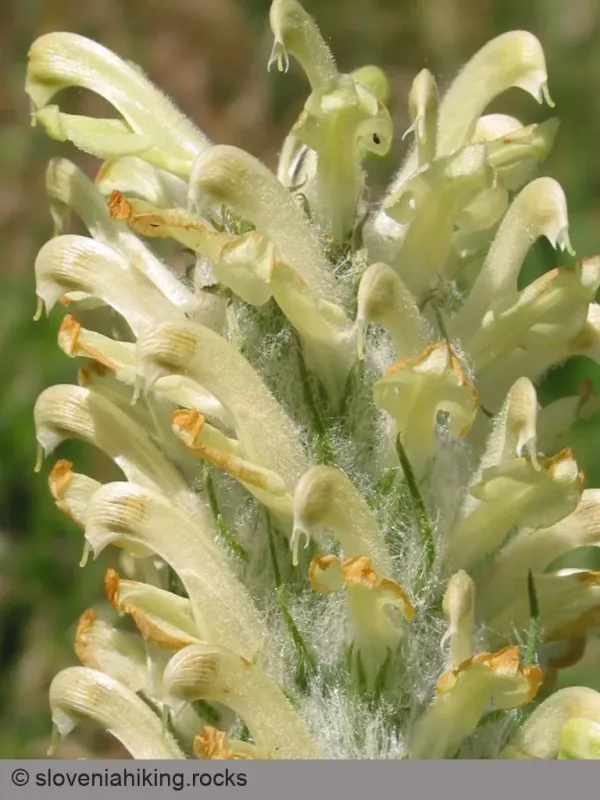
Description
Growing requirements
Pedicularis friderici-augusti, commonly known as a type of lousewort, is a herbaceous perennial belonging to the Orobanchaceae family. As a hemi-parasitic plant, it relies on haustorial connections to extract water and nutrients from the roots of adjacent plant species.
The plant is native to the alpine and sub-alpine regions of the Balkan Peninsula. Its distribution is largely confined to mountainous areas in countries such as Greece, Albania, and North Macedonia, where it thrives in specialized meadow environments.
Growth requirements for this species include well-drained, nutrient-rich soil and high levels of solar exposure. It is highly sensitive to soil compaction and waterlogging, preferring environments that mirror the cool, airy conditions of high-altitude mountain slopes.
The botany of the plant is defined by its complex, bilaterally symmetrical flowers arranged in dense terminal spikes. The foliage typically displays a serrated or deeply lobed structure, which is a classic evolutionary trait within the Pedicularis genus.
Regarding commercial utility, this species is not used in traditional agriculture. Its primary value is strictly restricted to botanical conservation, scientific research on semi-parasitic interactions, and specialized alpine gardening for biodiversity preservation.