
Pedicularis flammea
Pedicularis flammea
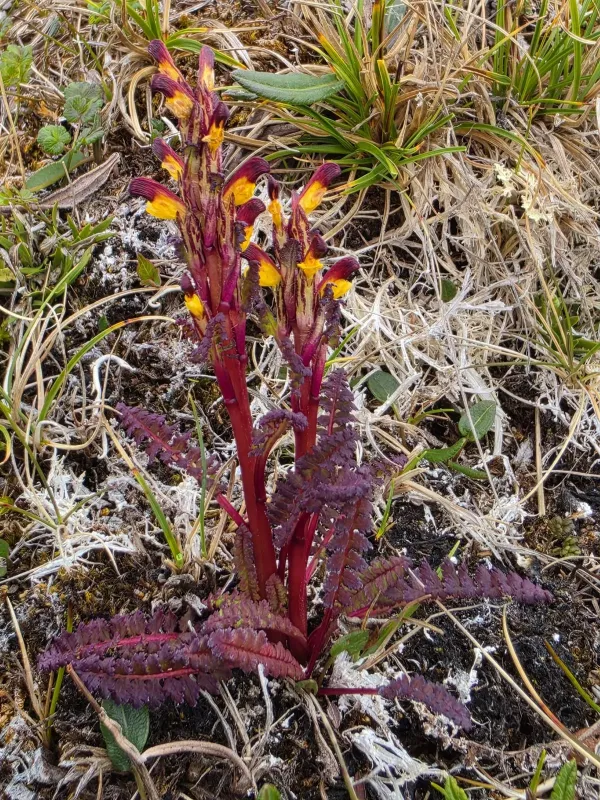
Description
Growing requirements
Pedicularis flammea, commonly known as the flame-colored lousewort, is a member of the Orobanchaceae family. It is a perennial hemi-parasitic plant, meaning it can photosynthesize but also relies on haustorial connections to extract water and nutrients from the roots of neighboring plant species.
The plant is native to the arctic and alpine regions of the Northern Hemisphere, including Scandinavia, Greenland, and parts of North America. Its distribution is strictly limited to cold environments such as wet tundras, heathlands, and along the banks of alpine streams where moisture is abundant.
Regarding habitat requirements, this species prefers nutrient-poor, moist, and slightly acidic soils. It thrives in areas where it can establish a stable relationship with suitable host plants, such as sedges or dwarf shrubs, which are essential for its nutritional intake and overall development.
In terms of agricultural or horticultural practice, it is not cultivated as a standard crop. Its growth is exclusively linked to its natural wild habitat. Attempts to grow the plant in artificial settings require strict adherence to soil moisture levels and the presence of verified host plants within the growing container.
Botanical features of Pedicularis flammea include a compact growth habit, typically reaching only a few inches in height. It is notable for its vibrant, flame-colored, helmet-shaped flowers and delicate foliage, which are specialized adaptations for survival in low-light and cold climates of high latitudes.