
Elongated lousewort
Pedicularis elongata
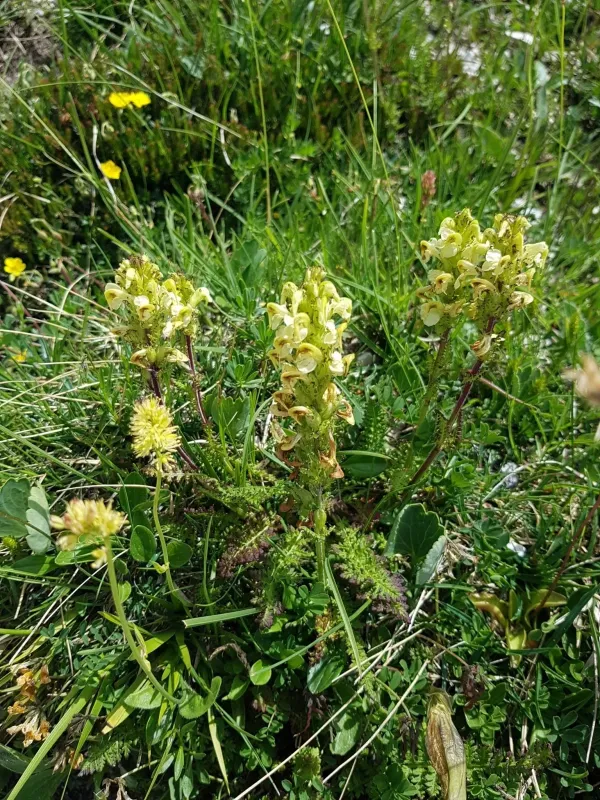
Description
Growing requirements
Elongated lousewort (Pedicularis elongata) is a member of the Orobanchaceae family. It is a herbaceous perennial plant native to the mountain regions of Europe.
A key biological feature of this species is its hemiparasitic nature. It possesses specialized root structures called haustoria, which attach to the roots of host plants to derive water and essential mineral nutrients.
The plant thrives in moist, well-drained soils with moderate organic content. It prefers habitats with a neutral or slightly acidic pH, which are typical of mountain meadows.
Sunlight is critical for the development of the plant; it typically occupies open areas where competition from taller, shade-casting vegetation is significantly reduced.
From an agronomic perspective, cultivating this species is highly challenging as it requires a stable, compatible host plant presence within the soil environment to complete its lifecycle.
Main diseases and pests
Environmental degradation and the drainage of alpine meadows pose the most significant threat to wild populations of this species, as it directly impacts the survival of host plants.
Soil-borne pathogens represent a major threat, particularly in conditions of poor aeration, as they can rapidly compromise the health of both the parasite and its host system.
Herbivorous insects targeting flower buds and seeds can significantly impede the reproductive capacity of the population, leading to a decline in local distribution.
The plant exhibits extreme sensitivity to agricultural chemicals, including herbicides and synthetic fertilizers, which disrupt the delicate nutrient-exchange balance between species.
Competition from invasive species can lead to habitat loss, where excessive shade prevents the lousewort from accessing the necessary solar radiation for photosynthesis.