
Pedicularis condensata
Pedicularis condensata
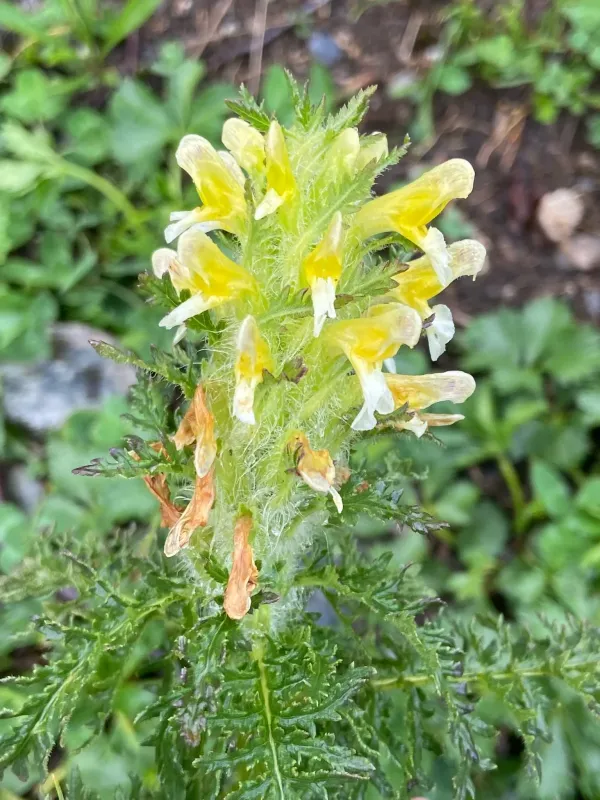
Description
Sowing dates
Pedicularis condensata is not a traditional agricultural crop but a perennial hemiparasitic herbaceous plant belonging to the Orobanchaceae family, which typically grows in natural mountain habitats.
Propagation occurs through seeds that require contact with the roots of a host plant to germinate and establish the haustorial connections necessary for nutrient uptake and water absorption.
Due to its specialized lifecycle as a root hemiparasite, this species is not cultivated in industrial agriculture and is generally considered a wild-growing botanical specimen.
Research-based sowing involves specialized conditions that mimic the natural environment, ensuring that host plants are available in the immediate vicinity of the seeds for survival.
The biological nature of this plant excludes it from conventional crop rotation cycles, as its presence could potentially interfere with the nutrient uptake of primary agricultural crops.
Growing requirements
The species prefers moderately moist and well-drained soils, typically occupying ecological niches on mountain slopes and alpine meadows where direct sunlight is available.
Climatic requirements are defined by its native range in Central Asian mountain regions, characterized by extreme diurnal temperature fluctuations and distinct seasonal patterns.
Soil nutrient composition is secondary to the presence of a suitable host species, though the plant shows a preference for neutral or slightly acidic substrate conditions.
Pedicularis condensata exhibits high frost resistance, allowing it to complete its life cycle within the short growing seasons typical of high-altitude ecosystems.
Artificial cultivation requires precise hydro-thermal management to prevent root-zone waterlogging, which significantly increases the risk of soil-borne pathogens.
Main diseases and pests
Fungal infections, such as powdery mildew, represent the most significant threat to the plant in environments with high humidity and poor air circulation.
Insects and herbivores can cause damage to the leaves and floral structures, although these threats are usually localized and do not jeopardize the survival of wild populations.
Habitat loss due to intensive livestock grazing is the primary threat, as it destroys the host plants upon which Pedicularis condensata relies for its survival.
Root rot is a major risk factor during prolonged wet spells or over-irrigation, potentially causing rapid degradation of the root system and plant death.
Viral infections transmitted by sap-sucking insects may occasionally occur, leading to stunted development and reduced reproductive output in infected plant patches.