
Clark's lousewort
Pedicularis clarkei
Description
Growing requirements
Clark's lousewort (Latin Pedicularis clarkei) is a perennial herbaceous plant belonging to the Orobanchaceae family. Historically, it was also associated with the Scrophulariaceae family. This species is a distinctive component of the alpine flora found in high-altitude mountain ranges.
The native distribution of this plant includes the high-altitude regions of the Himalayas, spanning across countries like India, Nepal, and China. It thrives primarily in damp alpine meadows, on open slopes, and in close proximity to mountain streams, where the soil is rich in organic matter and well-drained.
A key botanical characteristic of Pedicularis clarkei is its hemiparasitic nature. The root system is capable of forming haustorial connections with the roots of host plants, which allows it to supplement its nutrient intake, an essential adaptation for survival in nutrient-scarce alpine environments.
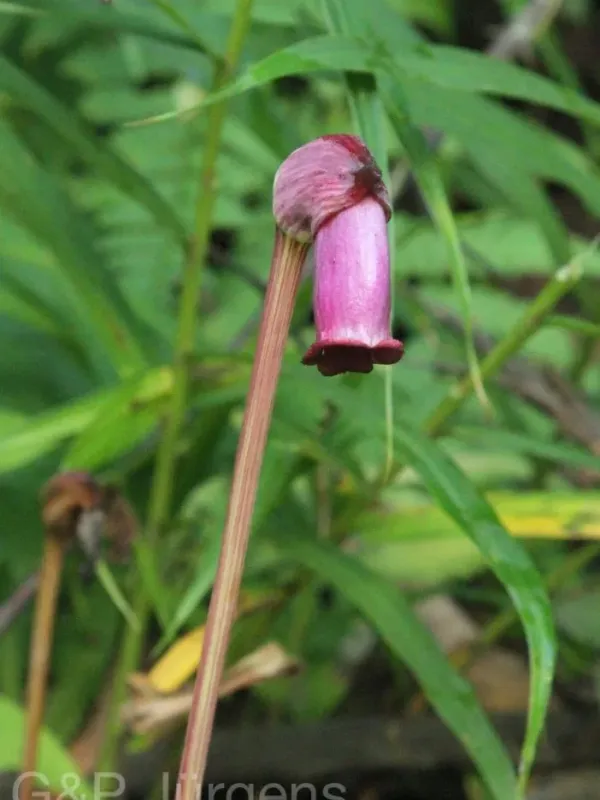
Morphologically, the plant features erect stems and showy inflorescences. The flowers often display vibrant purple or pink hues, exhibiting the typical complex floral structure of the Pedicularis genus, which is specifically adapted for pollination by specialized insects native to the region.
Regarding environmental requirements, the plant is strictly adapted to cool, moist climates. It lacks tolerance for prolonged high temperatures or drought conditions, which makes it highly sensitive in non-native environments. Successful maintenance requires consistent moisture levels and cool, alpine-like conditions with excellent soil aeration.