
Chamisso's lousewort
Pedicularis chamissonis
Description
Growing requirements
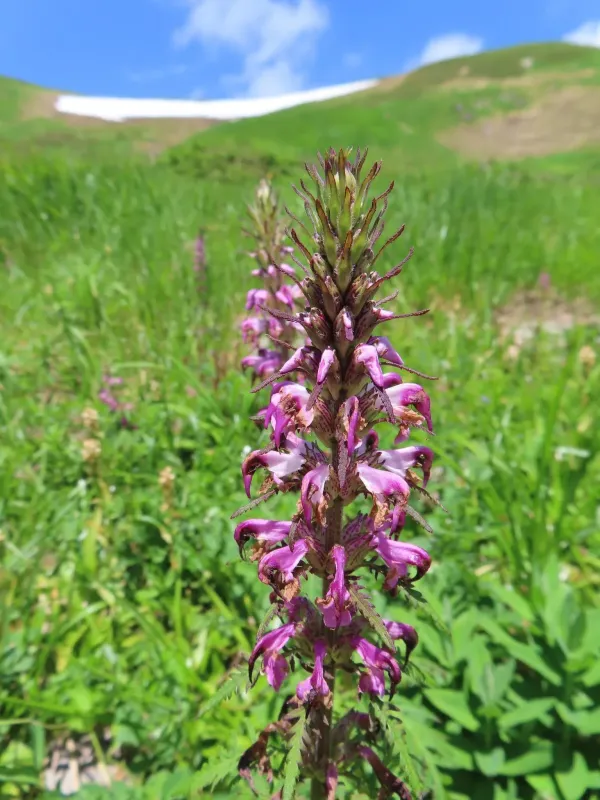
Chamisso's lousewort (Pedicularis chamissonis) is a perennial herbaceous plant belonging to the Orobanchaceae family. As a hemiparasite, it maintains the ability to perform photosynthesis while simultaneously tapping into the root systems of host plants to acquire additional water and essential nutrients.
The native range of this species is concentrated in the subarctic and temperate regions of the Far East and the North Pacific rim. It primarily thrives in wet meadow environments, stream banks, and subalpine habitats where the soil remains consistently moist throughout the growing season.
Environmental requirements for this plant are centered on high moisture availability and the presence of suitable host species, such as specific grasses or sedges. It is well-adapted to cooler climates and is capable of withstanding the harsh, frost-prone conditions characteristic of its native northern distribution.
In terms of soil, it prefers organic-rich substrates that are slightly acidic or neutral. Because of its hemiparasitic nature, it does not function well in isolated greenhouse cultivation and relies heavily on the success of the surrounding plant community for its survival.
From an agronomic perspective, this species is not cultivated as a field crop. Instead, it is recognized as a natural component of meadow ecosystems that interacts with forage species. Its presence in pastures is often managed in the context of maintaining biodiversity rather than agricultural production.
Main diseases and pests
Potential threats to the species include drastic changes in land management, such as heavy fertilization or drainage, which alter the competitive balance between the lousewort and its host plants. Overgrazing can also lead to the degradation of the plant community that this species relies upon.
There are no significant reports of agricultural pests or diseases impacting this plant. As a wild-growing species, it exhibits natural resistance to many common agricultural pathogens, and specialized control methods are typically unnecessary.