
Pedicularis cenisia
Pedicularis cenisia
Description
Growing requirements
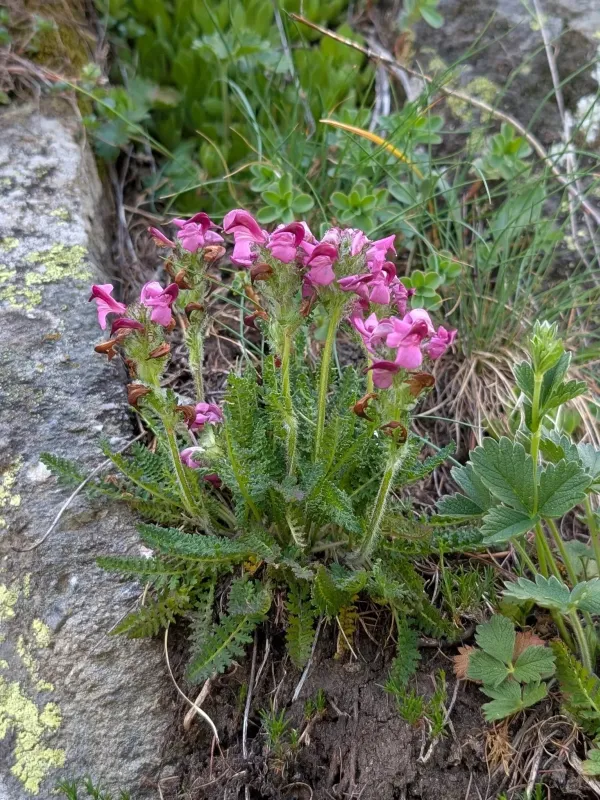
Pedicularis cenisia, commonly known as the Cenisia lousewort, is a herbaceous perennial plant belonging to the Orobanchaceae family. It is a specialized hemiparasite that relies on host plants for nutrients.
The species originates from the high-altitude regions of the Western Alps. Its natural habitat includes rocky alpine meadows and scree slopes where it can establish connections with host roots.
Botanically, it is characterized by its low-growing structure, often forming dense mats or tufts. Its life cycle is strictly tied to the short alpine summer season, forcing it to flower and set seeds rapidly.
It demands very specific climatic conditions, including consistent cold temperatures and intense ultraviolet light exposure. It cannot survive in lowland climates where summers are too long and hot.
Soil requirements are quite strict: it prefers nutrient-poor, mineral-heavy soils with excellent drainage. The plant is sensitive to synthetic fertilizers, which can interfere with its natural root parasitic behavior.
Main diseases and pests
The main threats to Pedicularis cenisia are fungal infections that occur during overly wet periods, specifically causing collar and root rot.
Various insect pests, such as larvae of specialized moths, can feed on the vegetative parts, hindering the plant's ability to produce sufficient photosynthetic mass.
Habitat loss due to retreating alpine glaciers and the encroachment of more competitive shrub species poses a significant threat to its long-term survival.
Grazing pressure from mountain herbivores can lead to physical damage, significantly reducing the chances of seed production in a given season.
Climate change, manifesting as rising temperatures at high elevations, is pushing the species to higher altitudes where suitable soil substrates may be limited.