
Caucasian lousewort
Pedicularis caucasica
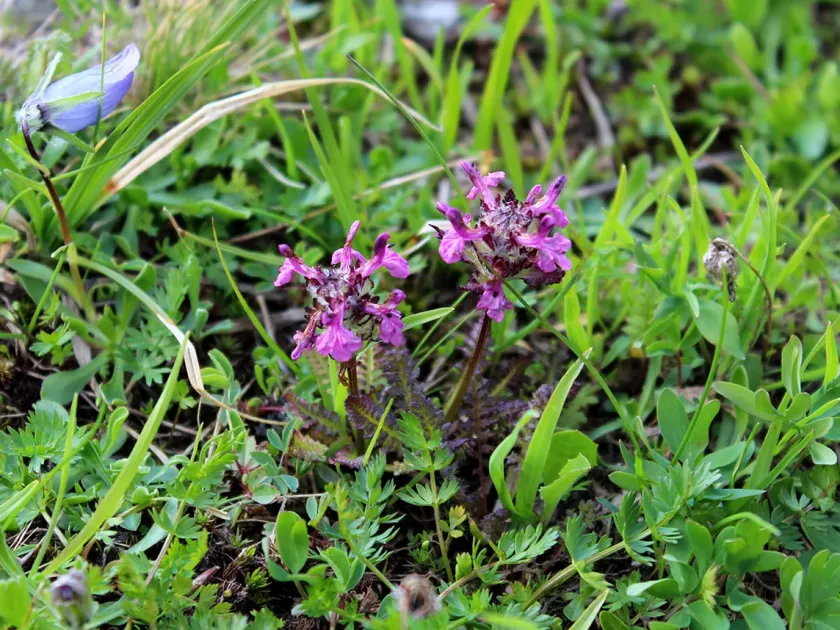
Description
Growing requirements
Caucasian lousewort (Pedicularis caucasica) is a perennial herbaceous plant belonging to the Orobanchaceae family. It is distinct for its semi-parasitic nature, which requires specialized knowledge for successful cultivation and maintenance.
The plant originates from the mountainous regions of the Caucasus. It typically inhabits subalpine meadows, where it thrives in moist, well-drained, and nutrient-rich soils that support its interaction with host plants.
Climatic requirements are specific to high-altitude environments. The plant prefers cool temperatures and constant moisture, struggling significantly in hot or dry conditions which are detrimental to its metabolism.
Regarding soil, it needs substrates with moderate acidity and high porosity. As a semi-parasite, it cannot be grown in isolation; it must be planted alongside host species that allow it to attach via haustoria to secure nutrients.
Its economic importance lies in the phytochemical field. The plant contains various secondary metabolites, including iridoid glycosides, which are of interest for pharmacological research due to their potential sedative effects.
Main diseases and pests
Root rot is the most significant threat to the crop, especially in poorly drained soils. Over-watering creates an environment where pathogenic fungi flourish, rapidly destroying the root system.
Insect pests such as aphids and leaf miners often target the foliage and flowers. These infestations not only cause mechanical damage but also serve as vectors for secondary bacterial infections within the patch.
Root-knot nematodes pose a severe challenge to the plant's health. By damaging the connection between the lousewort and its host, they effectively starve the parasite, leading to chlorosis and stunted development.
Management strategies should prioritize habitat stability and hygiene. Avoiding dense monoculture planting helps maintain airflow, which is crucial for reducing the risk of fungal outbreaks in the field.
Integrated pest management (IPM) is recommended to protect the crop. Because of the plant's complex biology, chemical intervention should be handled with caution to avoid disrupting the ecological balance required for its growth.