
Short-leaved lousewort
Pedicularis brevifolia
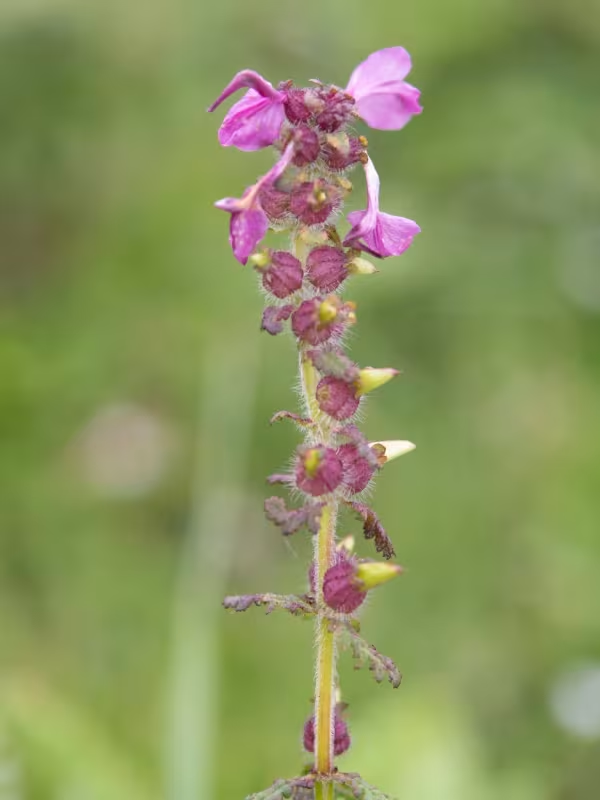
Description
Growing requirements
Short-leaved lousewort (Pedicularis brevifolia) is a perennial herbaceous plant belonging to the Orobanchaceae family. As a hemiparasitic plant, it relies on haustoria to extract nutrients from the roots of neighboring host plants to support its growth.
The native distribution of this species is primarily focused on high-altitude mountain regions, such as the Alps. It is specialized for cold climates, rocky soils, and environments where drainage is excellent and competition is moderate.
For successful growth, the plant requires cool temperatures and well-aerated, rocky soils that are poor in organic fertilizers. It does not tolerate high humidity around the roots, as excessive moisture leads to rapid decay of the delicate root system.
The climate requirements for Pedicularis brevifolia involve a long dormancy period during the winter months. Exposure to strong sunlight is essential, but it must be balanced with adequate soil moisture levels to prevent heat stress on the foliage.
Agrotechnical management in garden or research settings requires the presence of companion plants that act as hosts. Without these hosts, the plant will struggle to thrive and eventually fail to reproduce, making its cultivation quite challenging for growers.
Main diseases and pests
The primary diseases affecting short-leaved lousewort include root rot and fungal wilt, which typically appear when the soil remains waterlogged for extended periods. These conditions create the perfect environment for soil-borne pathogens.
Pests that frequently attack the plant include aphids, which cluster on the stems and suck sap, weakening the plant's structural integrity. Spider mites may also pose a threat during hot and dry spells, leading to yellowing and premature leaf senescence.
Weed encroachment is a major threat to the plant's stability. Because Pedicularis brevifolia is a slow-growing and specialized species, it is easily outcompeted by more aggressive weeds that can quickly smother its access to sunlight and soil nutrients.
Mechanical damage to the roots during weeding or maintenance often opens entry points for secondary bacterial infections. Any intervention in the soil around the plant must be minimal and extremely careful to avoid disturbance.
Extreme climate variability, such as unseasonable warmth in late winter or early spring, can trigger early growth that is later killed by frost. Protective measures like mineral mulching are recommended to regulate soil temperature and prevent damage.