
Patrinia scabiosifolia
Patrinia scabiosifolia
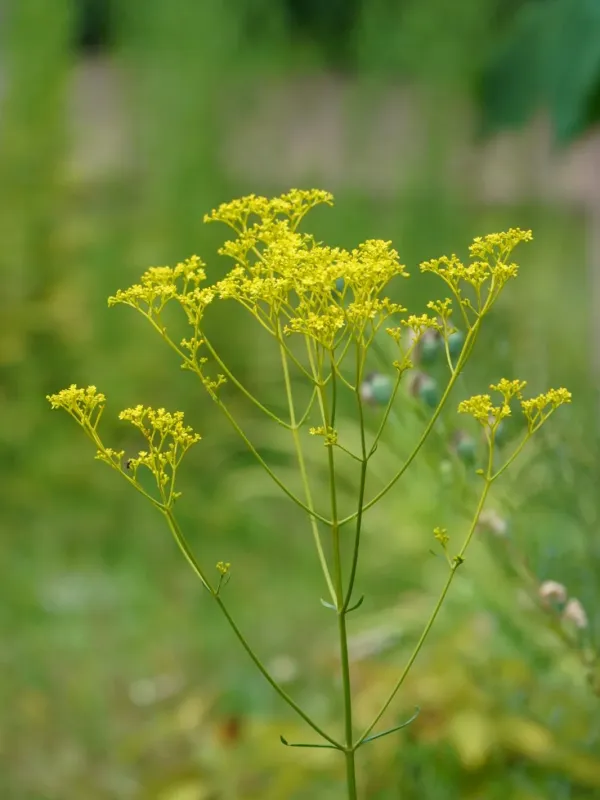
Description
Sowing dates
Patrinia scabiosifolia belongs to the Caprifoliaceae family. It is a perennial plant that requires specific preparation of seeds before sowing, specifically stratification for 4-6 weeks.
Sowing should be done in late autumn or early spring. The seeds are small, so they should be surface-sown or covered with a very thin layer of substrate (about 0.5-1 cm deep).
It is recommended to maintain a row spacing of 45-60 cm, which allows for mechanical weed control and ensures adequate airflow between mature plants.
The germination process is generally slow and requires consistent moisture. Once the seedlings develop two or three true leaves, they should be thinned to a spacing of 30 cm within the row.
As a perennial crop, site selection is critical. The field should be free of perennial weeds, as the plant can be slow to establish in its first growing season.
Growing requirements
The plant thrives in full sun but can tolerate partial shade. Full sun exposure is preferred to increase the concentration of secondary metabolites in the roots.
Soil requirements include well-drained, fertile soil. It is adaptable to various soil types, ranging from sandy loams to heavier clays, provided there is no waterlogging.
Watering is essential during the establishment phase. Once the plant has developed a deep root system, it becomes moderately drought-tolerant, although regular irrigation increases total biomass yield.
Fertilization with organic compost or balanced NPK fertilizers in early spring supports vigorous growth without causing excessive, succulent foliage growth.
Patrinia scabiosifolia is highly winter-hardy and can survive extreme temperature fluctuations, making it suitable for cultivation in diverse climatic zones.
Main diseases and pests
Fungal diseases like powdery mildew are the most common issue in dense plantings. Proper spacing and airflow are the best preventive measures.
Root rot occurs in poorly drained soils. Avoiding excessive irrigation and improving drainage are essential to protect the long-term health of the roots.
Pests such as aphids and spider mites can attack during hot, dry spells. Monitoring the underside of the leaves is a standard agronomic practice during the mid-season.
Integrated pest management (IPM) using biological control agents is recommended to maintain the quality of the raw material, as it is often destined for medicinal use.
Weed management in the early stages is crucial. Mulching or mechanical cultivation between rows helps keep the crop competitive against invasive grasses.
Harvesting
The root is the primary part harvested for medicinal use. Harvest usually takes place at the end of the second year when the aerial parts begin to die back.
The roots must be dug up carefully to avoid breaking, then washed thoroughly to remove soil particles before drying. Drying should occur in a temperature-controlled environment.
Temperature during drying should not exceed 50°C to preserve the integrity of the active chemical compounds within the roots.
Aerial parts can also be harvested during the flowering stage, which usually occurs from mid-summer to early autumn, depending on the geographical location.
Proper storage involves placing dried material in cool, dark, and dry conditions to prevent moisture re-absorption and subsequent degradation of active ingredients.