
Patrinia rupestris
Patrinia rupestris
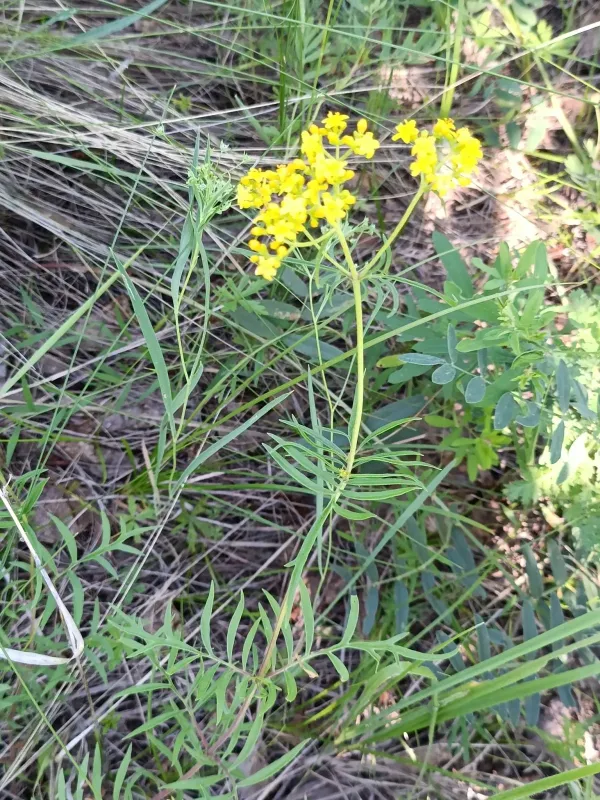
Description
Sowing dates
Sowing seeds of Patrinia rupestris in industrial or garden conditions is typically performed in late autumn, which ensures natural stratification of the seed material. Winter sowing allows seeds to undergo a full cycle of low temperatures, which significantly improves germination rates in the spring.
When spring sowing is preferred, seeds require preliminary preparation consisting of stratification at a temperature of 0-5 degrees Celsius for 30-45 days. This step is essential for breaking the deep organic dormancy of seeds belonging to this species.
Seeds are sown in rows with a spacing of about 45-60 centimeters to ensure an optimal nutrient area. The sowing depth should be minimal, no more than 0.5–1 centimeter, as tiny seeds may fail to germinate if buried too deep in the soil.
Seedlings develop relatively slowly in the first year, forming a basal rosette of leaves. During this period, it is important to provide regular soil cultivation and weed control, as young plants are easily suppressed by faster-growing competitors.
The optimal seeding density is about 10-15 plants per linear meter. In sparse stands, thinning is recommended to avoid overcrowding, which can lead to poor air circulation and the subsequent development of fungal diseases.
Growing requirements
Patrinia rupestris is a perennial herbaceous plant belonging to the Caprifoliaceae family (formerly Valerianaceae). In its natural habitat, it thrives on rocky slopes, talus, and dry meadows, which determines its high resistance to adverse environmental conditions.
The crop prefers well-lit areas as it is a light-loving plant. In shaded conditions, the development of Patrinia slows down, stems become elongated, and the accumulation efficiency of bioactive compounds in the rhizomes decreases significantly.
Patrinia rupestris is not overly demanding regarding soil type; however, it grows best in light, well-drained, aerated sandy loam or rocky soils. Waterlogging and heavy clay substrates can lead to root system decay.
The plant possesses notable drought and frost resistance. It is well-adapted to the harsh climatic conditions of regions such as Siberia and the Far East, tolerating significant temperature fluctuations and the absence of snow cover during the winter period.
A critical factor in successful agronomy is moderate moisture during the active growth phase. Excessive nitrogen fertilization may negatively affect the medicinal properties of the plant, so priority should be given to mineral complexes with high phosphorus and potassium content.
Yield
The economic value of Patrinia rupestris lies in its underground part — the rhizomes, which contain a complex of valuable bioactive compounds. Commercial harvest is performed in the second or third year of the plant's life, when root biomass reaches its peak.
The yield of dried rhizomes, when following proper cultivation technology, can range from 1.5 to 3 tons per hectare. This indicator strongly depends on soil fertility, plant density, and the timeliness of agronomic interventions.
The period of intensive accumulation of saponins and other active substances in the roots occurs during the fruiting phase or the plant's dormancy. These phases are the most appropriate time for mechanized harvesting operations.
Biological productivity of the aerial parts is also of interest, although its harvest is secondary. On average, up to 2-4 tons of dry aerial mass can be obtained per hectare, which is utilized in animal feed production or pharmacology.
Yield stability is ensured by the plant's perennial life form. With proper care, a plantation can be exploited for 4–6 years without the need for reseeding, which is economically beneficial for commercial cultivation purposes.
Main diseases and pests
Patrinia rupestris is characterized by high resistance to typical agricultural pests. The dense leaf structure and the presence of specific secondary metabolites make it relatively unattractive to many insect species.
In rare cases, poor agronomic practices and stagnant moisture near the root collar can lead to root rot caused by pathogenic fungi from the Fusarium and Rhizoctonia genera. These diseases are the most dangerous as they can lead to the rapid death of the productive part of the plant.
To prevent the spread of rot, it is recommended to perform prophylactic seed treatment before sowing and to maintain proper crop rotation. Additionally, the timely removal and disposal of infected specimens from the plot is highly effective.
During dry years, crops may occasionally be affected by spider mites or aphids, which feed on the sap of young leaves. The use of insecticides is permitted only when the damage threshold is reached, given the medicinal purpose of the culture.
Weeds pose the primary threat to young plantations, as they compete for light, moisture, and nutrients. Lack of weed control during the initial growth stage is the main factor leading to a decrease in overall plantation productivity.
Harvesting
Harvesting of Patrinia rupestris rhizomes is performed primarily in the autumn after the completion of the growing season, as the aerial parts begin to die back. During this time, the concentration of active substances in the root system reaches its maximum.
The harvesting process involves digging up the rhizomes to a depth of 25-30 centimeters. Specialized tools such as lifting shares or modified potato diggers adjusted to the appropriate root depth are utilized for this purpose.
After extraction from the soil, the rhizomes are cleaned of debris, washed in running water, and freed from small rootlets and aerial residues. High-quality raw material cleaning is a mandatory requirement to meet pharmacopoeial standards.
Drying is performed in dryers at a temperature not exceeding 50-60 degrees Celsius to preserve the bioactive compounds. Shade drying in well-ventilated rooms is also permitted by spreading the roots in a thin layer.
Finished raw material should be stored in dry, cool, dark places in paper or fabric bags. Properly dried Patrinia rhizomes have a shelf life of up to three years without losing their therapeutic effectiveness.