

Crop
Japanese millet
Echinochloa frumentacea Link
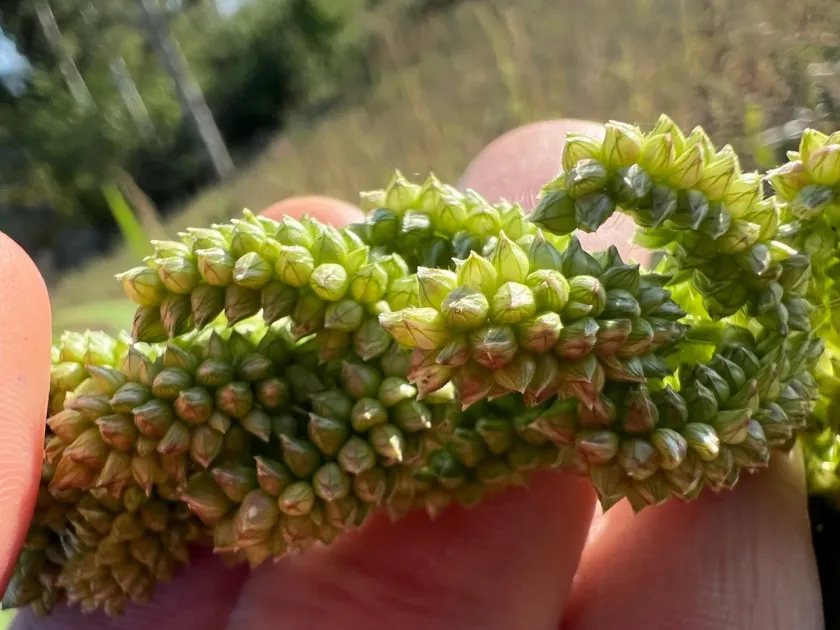
Description
Sowing dates
Japanese millet is a warm-season crop, meaning it thrives in high temperatures and should only be sown once the soil temperature consistently reaches at least 12–15°C. Early summer or late spring is the ideal planting window.
A well-prepared seedbed is essential for successful establishment. The soil should be finely tilled to ensure excellent seed-to-soil contact, which promotes uniform germination across the field.
The planting depth should typically be 2 to 4 centimeters. Because the seeds are relatively small, it is important not to bury them too deeply, as this can delay emergence or lead to poor stand density.
Seeding rates depend heavily on the intended use. Higher rates are generally used for forage production to create a dense canopy that suppresses weeds, whereas lower rates are preferred for seed production to allow for better tillering.
Rolling the field immediately after sowing is a recommended agronomic practice. This firms the soil, retains vital moisture in the upper layers, and helps protect the developing roots from desiccation during dry spells.
Growing requirements
As a member of the Poaceae family, Japanese millet is known for its remarkable adaptability. While it is considered drought-tolerant once established, it responds significantly to adequate moisture during the vegetative growth phase.
The crop is not overly demanding regarding soil type and can perform well on sandy to loamy soils. However, the best results are obtained on fertile, well-drained soils that have a neutral to slightly acidic pH level.
Poorly drained or waterlogged soils should be avoided, as the plant does not tolerate standing water well. Proper soil aeration is crucial for the development of a healthy root system and vigorous initial growth.
Consistent warm weather is required throughout the growing season for optimal development. Fertilizer applications, particularly nitrogen, are highly beneficial in boosting vegetative biomass and protein content in the leaves.
Weed management in the early stages is critical. Since the plant can be slow to start, keeping the inter-row spaces clean via mechanical cultivation helps the crop establish dominance over competing weed species.
Yield
Japanese millet is highly productive, capable of yielding 20–30 tons of green forage per hectare under favorable conditions. It is a rapid grower and possesses an excellent capacity for regrowth after mowing.
For seed production, yields typically range from 1.5 to 2.5 tons per hectare. The seeds are highly nutritious, containing significant amounts of protein and energy, making them excellent as animal feed or birdseed.
Maximum yield potential is achieved when water is abundant during the booting stage. While the crop can survive periods of water stress, consistent irrigation during the most active growth phases ensures top-tier performance.
In warmer climates with a long growing season, farmers can often harvest multiple cuts. This ability makes Japanese millet a flexible tool for managing year-round fodder supply in intensive livestock systems.
The nutritional profile is highest when the plant is harvested before seed maturity. Harvesting at the booting to early flowering stage provides the best balance of digestible fibers, proteins, and essential minerals.
Main diseases and pests
Generally, Japanese millet is resistant to many common cereal diseases. However, in humid conditions or overly dense stands, fungal issues like smut or rust may occur, which can impact the quality of the fodder.
Several pests commonly associated with millet crops may pose a threat, including shoot flies and leaf-eating caterpillars. These are most destructive during the seedling stage when the plant is most vulnerable.
Preventative measures, such as following a balanced crop rotation, are essential. Avoiding consecutive planting of millet-related crops in the same field helps break the lifecycle of common soil-borne pathogens.
Field scouting is recommended from the moment of emergence. If pest populations exceed economic thresholds, judicious use of insecticides may be necessary, though cultural control methods are often sufficient.
Maintaining a healthy, vigorous crop through proper fertilization and water management serves as the first line of defense. Strong, well-nourished plants are naturally more resilient against both environmental stressors and pest attacks.
Harvesting
When harvesting for forage, timing is paramount. Mowing should take place between the booting and flowering stages to ensure the biomass remains palatable, succulent, and highly digestible for livestock.
For seed harvests, producers must wait until the grain reaches physiological maturity. Because the crop can be prone to shattering if left too long, precision in monitoring is necessary to minimize harvest losses.
The mowing height is a key factor for successful regeneration of the crop. Leaving at least 10 centimeters of stubble allows the plant to recover quickly and encourages the development of new shoots for the next cut.
Harvested grain must be dried and cleaned promptly. For safe storage and to prevent mold or spoilage, grain moisture levels should be reduced to 14 percent or below through mechanical drying or active ventilation.
The crop is also well-suited for silage production. The high sugar content in the stalks facilitates efficient fermentation, resulting in high-quality silage that remains stable throughout the storage period.
Content graph
Connections · Japanese millet
Most often together:
Marketplace


