
Jungle rice
Echinochloa colona (L.) Link
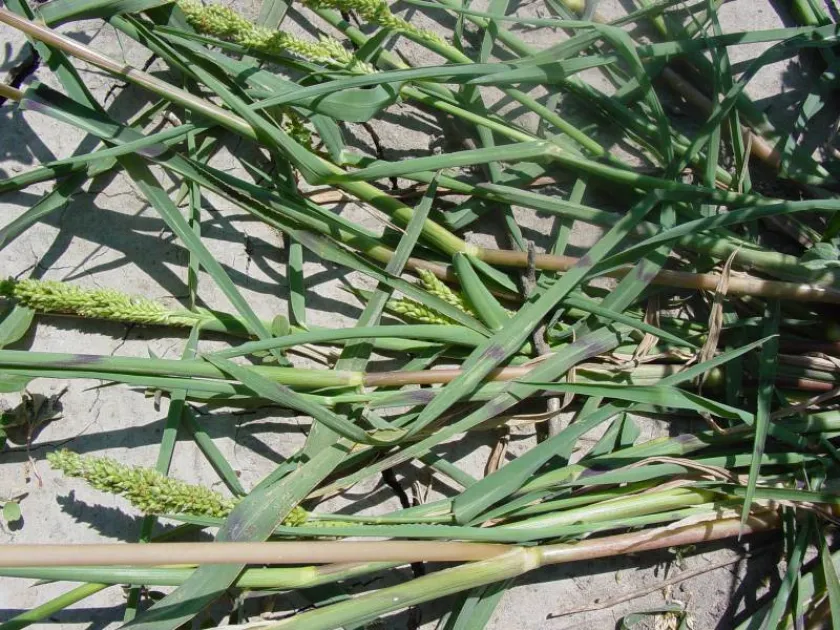
Description
Sowing dates
Jungle rice is an annual grass that typically germinates when soil temperatures exceed 15–18°C. In tropical and subtropical regions, germination occurs rapidly following irrigation or rainfall.
The seeds are highly adaptable and can germinate under flooded conditions, making the plant a primary weed in paddies. It possesses high vigor in the early growth stages.
Seeds are usually sown at shallow depths of 0.5 to 2 cm, which is sufficient for rapid establishment and competition with crops for early resources.
The life cycle from seedling emergence to flowering is relatively short, often taking between 45 and 60 days, allowing for multiple generations per year.
Agricultural management requires stale seedbed techniques, where the field is prepared and watered to trigger weed germination, followed by destruction before planting the main crop.
Growing requirements
Jungle rice thrives in moist, heavy-textured soils and is specifically adapted to the semi-aquatic conditions characteristic of paddy fields.
The plant requires ample sunlight and heat to reach its full potential, showing stunted growth when heavily shaded by taller crop varieties.
It responds aggressively to high nitrogen availability, often outcompeting crops in fields that are heavily fertilized or have high organic matter content.
The plant exhibits high tolerance to anaerobic soil conditions, which provides a significant competitive advantage over non-adapted crop varieties in waterlogged areas.
While it prefers neutral pH levels, it is ecologically plastic and can grow in various soil types, provided that moisture availability remains consistent throughout the season.
Yield
In agricultural settings, jungle rice is considered a devastating weed that can lead to catastrophic yield losses in rice, sorghum, and other grass crops.
A single plant can produce thousands of seeds, which quickly form a persistent soil seed bank that threatens future crop cycles if not properly managed.
High infestation levels can result in yield reductions exceeding 50% due to resource depletion, including nitrogen and sunlight competition.
While the biomass can be used as emergency grazing for livestock, the economic damage caused by the weed far outweighs any value derived from its use as fodder.
Yield loss is primarily driven by the timing of infestation; early competition from jungle rice is particularly damaging to the crop's tillering capacity.
Main diseases and pests
Jungle rice acts as a primary host for several fungal pathogens, including various rusts and leaf spots that migrate to economically important grain crops.
It also serves as a significant reservoir for viral diseases, such as rice dwarf virus, and supports populations of insect vectors like leafhoppers.
Various insect pests, including weevils and flea beetles, target jungle rice, yet the plant's high compensatory growth often minimizes the impact of these pests.
Many populations of jungle rice have developed resistance to common herbicides, including ALS inhibitors, making chemical control increasingly challenging for farmers.
Integrated weed management, including rotation to non-flooded crops and the use of site-specific herbicides, is necessary to keep infestations under threshold levels.
Harvesting
If utilized as fodder, harvesting must be completed before the plants reach the dough stage to prevent the dispersal of seeds and further field contamination.
In rice production, the presence of jungle rice complicates mechanical harvesting by clogging equipment and increasing the cleaning costs for grain.
Post-harvest hygiene is critical, as seeds easily contaminate machinery, clothing, and transport vehicles, allowing the weed to spread to uninfested areas.
Deep tillage following harvest is recommended to bury seeds at depths that inhibit successful germination in the subsequent planting season.
Ensuring that only certified, weed-free seed is used for planting remains the first line of defense in preventing the introduction of this aggressive grass species.