
Japanese barnyard millet
Echinochloa esculenta (A. Braun) H. Scholz
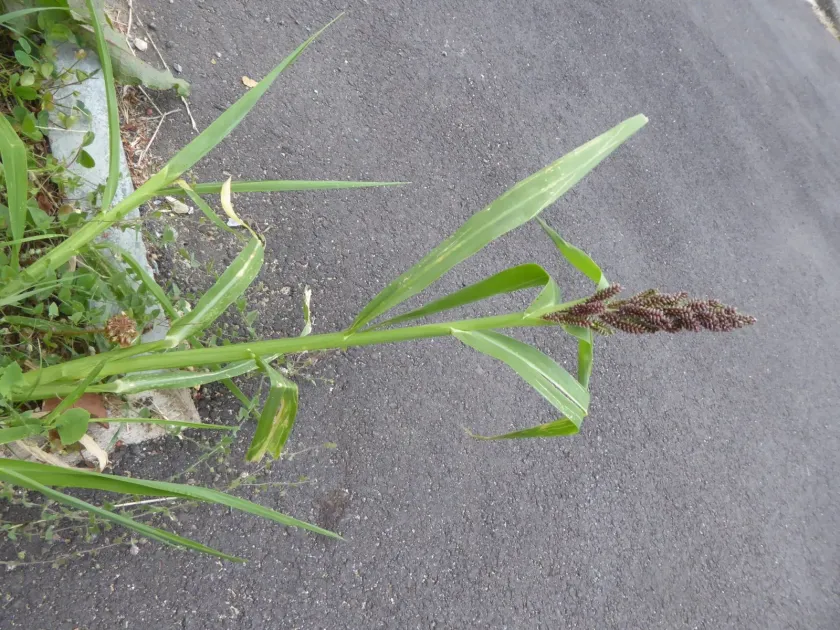
Description
Sowing dates
Japanese barnyard millet (Echinochloa esculenta) is sown in warmed soil once temperatures reach 12–15 degrees Celsius. The optimal sowing window typically falls in late May or early June, depending on the specific regional climate.
The crop is usually drilled in rows or narrow rows with spacings of 15–30 cm. Seeds should be sown at a depth of 2–3 cm, as they are relatively small and require firm contact with moist soil to ensure uniform germination and early establishment.
Seeding rates vary depending on the intended use: 10–12 kg per hectare for grain production, while rates increase to 20–25 kg per hectare for green fodder production to achieve a dense canopy.
Rolling the field after sowing is recommended to improve capillary water movement and ensure consistent emergence. The crop exhibits rapid initial growth, which allows it to compete effectively against weeds during the early developmental stages.
In cases of dry soil conditions at planting, irrigation should be considered, as barnyard millet is particularly sensitive to desiccation of the topsoil during the first two weeks post-emergence.
Growing requirements
Japanese barnyard millet belongs to the Poaceae family and is an annual herbaceous plant. It is a thermophilic crop that thrives in temperatures between 20 and 30 degrees Celsius, though it exhibits tolerance to minor temperature fluctuations.
The plant has moderate soil requirements, preferring fertile, moisture-retentive loams or sandy loams. Success is most likely in soils with a neutral or slightly acidic pH, which facilitates optimal nutrient uptake.
A key biological advantage of this crop is its high tolerance to waterlogging. Barnyard millet is capable of growing in areas prone to periodic flooding, where other cereal crops often fail due to root suffocation.
The plant possesses a robust root system capable of extracting nutrients from deeper soil horizons. This characteristic makes it a promising candidate for crop rotations that rely on reduced inputs of synthetic fertilizers.
Adequate sunlight is essential for the normal development of the crop. Excessive shading leads to reduced productivity, stem elongation, and increased susceptibility to lodging during the panicle formation phase.
Yield
Grain yields for Japanese barnyard millet typically range from 2.5 to 3.5 metric tons per hectare under proper agronomic management. Under high-input farming systems, yields can potentially reach up to 4 metric tons.
For green fodder, the crop yields between 20 and 35 metric tons of fresh biomass per hectare. It is highly valued for its excellent regrowth ability after cutting, allowing for multiple harvests per growing season.
The quality of barnyard millet forage is highly regarded in livestock production due to its significant protein and sugar content, which are critical for balanced ruminant nutrition.
Yield stability is directly influenced by the distribution of rainfall during critical growth phases, such as jointing and panicle emergence. In drought years, productivity may decline by 30–40 percent.
Harvesting for grain requires precise timing, as the seeds are prone to shattering upon reaching full maturity. Grain moisture at harvest should be around 14–16 percent to ensure safe storage and prevent spoilage.
Main diseases and pests
Japanese barnyard millet possesses a relatively high natural resistance to many diseases common in other cereal crops. However, in high humidity, crops may be susceptible to smut, necessitating seed treatment prior to planting.
Among pests, cereal flies and aphids pose the greatest threat, particularly by damaging young seedlings early in the season. Field monitoring during the emergence phase allows for timely plant protection measures.
Wireworm larvae can damage crops, especially when planting into fields previously used for permanent pasture. Pre-sowing soil treatments with appropriate insecticides are recommended in such situations.
Strict adherence to crop rotation is critical, avoiding the placement of barnyard millet after other Poaceae crops to minimize the buildup of host-specific soil pathogens and reduce the risk of large-scale infestations.
Under conditions of high humidity and high planting density, the development of panicle fusarium is possible. Maintaining optimal seeding rates and effective weed management facilitates better airflow, thereby reducing disease risk.
Harvesting
Harvesting for green fodder is performed during the panicle emergence phase, as this is when the plants contain the highest concentration of nutrients and optimal fiber digestibility.
For hay production, harvesting is conducted at the start of flowering to capture the maximum biomass volume. Quick drying of the cut material is essential to preserve carotene and vitamin levels in the feed.
For grain production, direct combining is the standard method, performed when the grains achieve their characteristic color and stem moisture has sufficiently decreased. Adjusting threshing apparatus settings is essential to avoid mechanical damage to the seeds.
Post-harvest processing includes initial cleaning and mandatory drying to safe moisture levels. Long-term storage requires dry, well-ventilated grain storage facilities.
Residues following grain harvest provide valuable forage straw, which is commonly used as roughage for livestock or as bedding material in agricultural facilities.