
Barnyard grass
Echinochloa crus-galli (L.) P. Beauv.
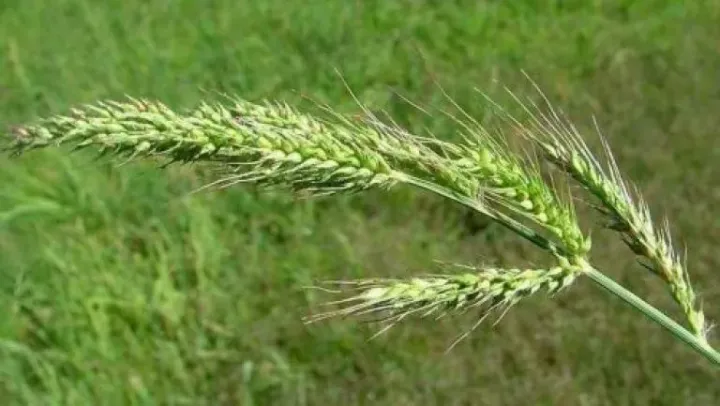
Description
Sowing dates
Barnyard grass (Echinochloa crus-galli), a member of the Poaceae family, is a warm-season annual plant. Sowing should be timed for when the soil temperature at planting depth reaches 12–14 degrees Celsius for optimal germination.
Sowing too early in cold soil can result in poor field emergence and uneven seedling development. Typically, seeding is carried out in late May, ensuring the risk of late spring frosts has passed.
For forage production, drilling with 15 cm row spacing is the standard practice. A seeding rate of 15–20 kg per hectare is generally recommended to establish a dense, high-quality grass stand.
Planting depth is crucial due to the small seed size; seeds should be placed no deeper than 2–3 centimeters. In light, sandy soils, slightly deeper planting may be necessary to ensure contact with the moisture-retaining layer.
Rolling the soil after seeding is a vital agronomic step. This practice improves soil-to-seed contact and capillary water movement, leading to faster, more uniform emergence across the field.
Growing requirements
This crop has high thermal requirements. As a classic heat-loving plant, it thrives at temperatures above 20 degrees Celsius, exhibiting rapid growth rates when provided with sufficient warmth and sunlight.
Barnyard grass is highly dependent on moisture. Naturally found in damp areas, riverbanks, and floodplains, the crop responds positively to irrigation, making it a productive choice for managed agricultural systems.
While it prefers fertile, loose soils rich in organic matter and nitrogen, it is ecologically plastic. It can successfully adapt to various soil types, including heavier clays that might pose drainage challenges for other crops.
It tolerates a range of soil pH levels, performing well in neutral to slightly acidic conditions. It is important to avoid saline soils, as high salt levels will significantly stunt development and reduce biomass production.
Adequate sunlight is essential for successful cultivation. Shading results in elongated stems, weaker root systems, and a decrease in the overall nutritional value of the harvested biomass.
Yield
The yield potential of barnyard grass is substantial when appropriate management practices are followed. Under optimal conditions, forage yields can reach 300–400 quintals per hectare within a single growing season.
Seed production is equally robust; a single healthy plant can produce 10,000 to 15,000 seeds, providing a high multiplication rate for seed-multiplication purposes.
When harvested as forage, peak yields of high-quality material are obtained between the boot stage and early heading. This window ensures the highest content of crude protein and soluble sugars.
Biomass accumulation is directly correlated with mineral nutrition. Nitrogen fertilization is effective in stimulating vegetative growth, allowing for a significant increase in total harvestable biomass.
For multiple-cut systems, applying fertilizer after each harvest promotes rapid regrowth. The plant's ability to regenerate quickly allows for two to three cuts per season in favorable climates.
Main diseases and pests
Barnyard grass is generally resilient to many common grass diseases. However, in high humidity conditions, rust infections can occur, which may negatively impact the palatability and overall quality of the forage.
Among pests, cereal flies can be problematic by attacking young seedlings early in the season. Early detection and proactive monitoring are key to minimizing potential economic losses.
Aphid infestations are also possible, as they feed on plant sap and slow down growth. In drought-stressed conditions, the impact of sucking insects increases, necessitating careful observation of the fields.
Thrips may cause damage leading to deformed inflorescences and reduced seed set, which is a concern for seed crops. Field scouting helps identify and manage these pest populations before they reach economic thresholds.
Integrated Pest Management (IPM) strategies, which prioritize cultural controls and biological agents over chemical pesticides, are the preferred approach to managing threats in this crop.
Harvesting
Harvesting for forage or hay must be completed before stems become coarse. The optimal window is during the heading stage, as this ensures the plant is at its peak nutritional value before energy shifts to seed development.
Delayed harvesting significantly lowers forage quality due to the translocation of nutrients into reproductive structures and an increase in structural fiber content, which reduces animal intake.
For hay production, mowing followed by tedding is standard. Due to its vigorous growth and structural characteristics, the plant dries quickly in good weather, retaining its color and aromatic qualities.
For seed crops, direct combining is the standard method, performed when the lower parts of the panicles show mature color. Care must be taken to avoid shattering, as the seeds drop easily once fully ripe.
Post-harvest handling requires immediate cleaning to remove debris and drying to a moisture content of 12-13 percent. Proper storage conditions ensure the seed maintains high viability for future planting.