
Three-flowered oxytrope
Oxytropis triflora
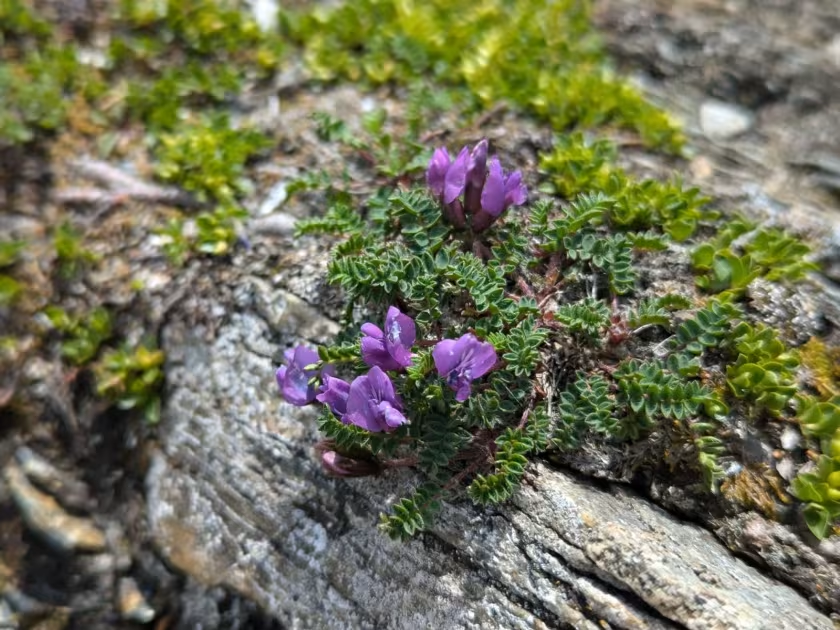
Description
Sowing dates
The three-flowered oxytrope (Oxytropis triflora) is a perennial herbaceous plant belonging to the legume family (Fabaceae). It is well-adapted to harsh climatic conditions, thriving in tundra and high-altitude regions.
Sowing should ideally take place in early spring to utilize available soil moisture. The seeds require stratification to break dormancy and ensure uniform germination across the field.
Seeds should be planted at a shallow depth of 1-2 cm. Proper soil contact is essential, and light compaction after sowing promotes faster moisture absorption by the seed coat.
The establishment phase is relatively slow, requiring careful weed management. During the first year, the plant invests primarily in root development, so competition from aggressive grasses should be minimized.
As an entomophilous plant, it relies on pollinators like bumblebees. Proper site selection should consider proximity to pollinator habitats to maximize seed yield for future propagation.
Growing requirements
This species thrives in well-drained, sandy, or rocky soils. It is highly intolerant of waterlogged conditions, which can lead to root decay and decreased plant vigor.
Oxytropis triflora is remarkably cold-hardy, capable of surviving sub-zero temperatures typical of arctic and alpine environments. Its physiological makeup allows it to resume growth rapidly once temperatures rise.
High sunlight exposure is critical. The plant is a sun-loving species and should be cultivated in open areas where it is not shaded by taller, more competitive vegetation.
The plant benefits from nitrogen-fixing nodules on its roots, allowing it to flourish in nutrient-poor soils where other crops might struggle to survive.
While adapted to harsh climates, the plant shows significant drought tolerance, though supplemental moisture during the flowering stage can improve the production of biomass.
Yield
The primary agricultural utility of the three-flowered oxytrope lies in its use as high-quality forage for grazing livestock, particularly in northern pastoral systems.
Despite its modest size, the plant provides high protein content, making it a valuable addition to range management plans. Yields are stable and reliable even in unfavorable soil conditions.
Its ability to remain nutritious late into the season makes it an excellent choice for autumn grazing, filling a crucial gap in the nutritional cycle for livestock.
Integrating it into multispecies pastures helps restore soil nitrogen levels, thereby indirectly improving the yield of companion grass species in the grazing field.
Sustainable use of the crop involves rotation grazing to prevent overgrazing, ensuring that the plant has time to recover and store nutrients for the following growing season.
Main diseases and pests
Fungal diseases, such as powdery mildew, are the main threat during periods of excessive humidity. Ensuring proper airflow through wider plant spacing helps mitigate these risks.
Insects like weevils can damage seeds, leading to lower reproduction rates. Regular monitoring of the flowering phase is recommended to identify potential pest outbreaks early.
Root rot is a common symptom of poor soil drainage. Maintaining healthy aeration of the soil profile is the most effective preventative measure against subterranean pathogens.
Disease management strategies should prioritize integrated approaches, including the use of certified healthy seeds and avoiding monoculture practices in sensitive regions.
In some areas, wildlife damage from small rodents can occur; therefore, protective measures such as fencing may be necessary for experimental or high-value seed multiplication plots.
Harvesting
Seed harvest should be timed carefully when the seed pods turn brown and begin to dry. Timeliness is crucial to prevent the pods from shattering and losing seeds on the ground.
For forage production, the crop should be mowed at the peak of flowering. This stage offers the best balance between biomass quantity and protein quality for silage or hay.
Seeds should be dried in a well-ventilated, shaded area to maintain viability. Proper storage in cool, dry conditions prevents fungal growth and ensures long-term seed longevity.
When grazing, management should aim to maintain adequate leaf surface area, preventing the livestock from stripping the plant to its base, which could impede recovery.
Specialized low-cutting equipment is recommended for harvesting the biomass, as the plant's growth habit is close to the ground, requiring precise mechanical intervention.