
Blue oxytrope
Oxytropis caerulea
Description
Growing requirements
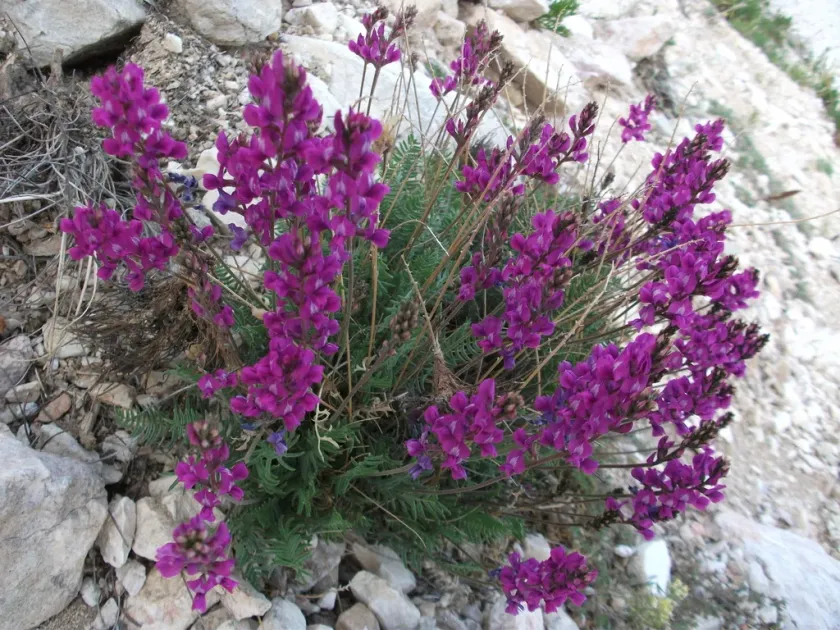
Blue oxytrope (Oxytropis caerulea) is a perennial herbaceous plant belonging to the Fabaceae family. It is natively found in arid and semi-arid regions of Central and East Asia, thriving in open, stony, and steppe environments.
The plant features a robust taproot system that ensures high drought tolerance and stability in nutrient-poor substrates. This structural adaptation allows the species to persist in harsh climates where other forage crops might struggle to survive.
Optimal soil conditions for this crop include well-drained, sandy or loamy textures with a neutral to slightly alkaline pH. The plant is highly sensitive to waterlogging, as excessive soil moisture promotes root rot and reduces overall plant vigor significantly.
Blue oxytrope requires full sun exposure to maximize biomass production and seed set. It is considered an obligate heliophyte; therefore, sites with high canopy closure or nearby obstructions are unsuitable for commercial cultivation.
Agronomic management involves careful selection of planting density. Given the plant's relatively slow establishment phase during the first season, effective weed management is essential to prevent competition and ensure healthy stand development.
Main diseases and pests
The primary threats to Oxytropis caerulea include soil-borne fungal pathogens, such as Fusarium species, which often manifest in fields with poor drainage or over-irrigation. Maintaining field hygiene is crucial to prevent these infections.
Various coleopteran pests, specifically weevils, represent a major threat to seed production. These insects penetrate developing pods, damaging seeds and significantly reducing the harvest potential in commercial seed-growing areas.
Powdery mildew is a common foliar disease observed under conditions of high humidity and poor air circulation. Implementing wider row spacing helps to maintain adequate airflow and mitigate the severity of fungal outbreaks.
Aphid infestations can occasionally occur, causing stunted growth and chlorosis. While the plant is generally hardy, significant aphid pressure can weaken the stand, making it more susceptible to secondary viral or bacterial infections.
Integrated pest management strategies are recommended to minimize chemical reliance. This includes rotation cycles that interrupt the life cycles of specific legume-feeding pests and the use of resistant varieties if available in the region.