
Dinaric oxytrope
Oxytropis dinarica
Description
Growing requirements
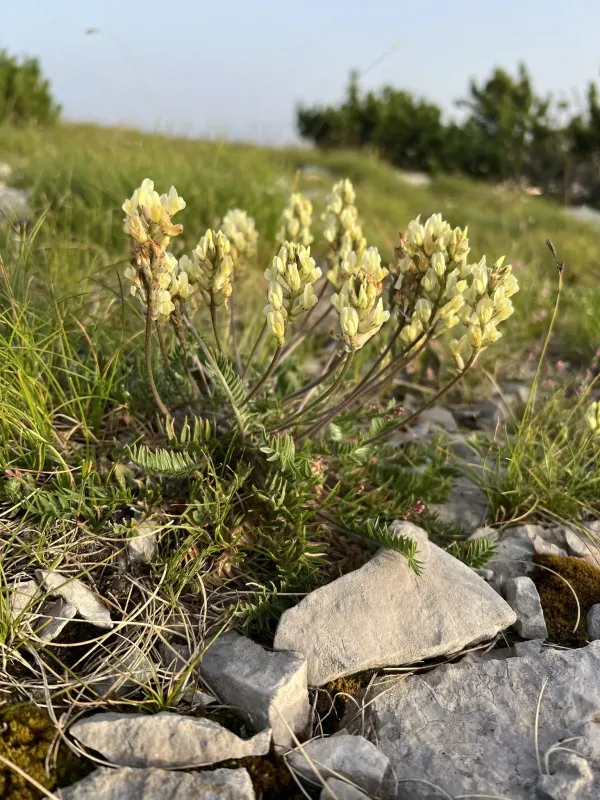
Dinaric oxytrope (Oxytropis dinarica) is a herbaceous perennial belonging to the Fabaceae family. This species originates from the high-altitude alpine zones of the Dinaric Alps, where it thrives in harsh mountain environments with significant rocky exposure.
Botanically, the plant is characterized by a deep taproot system and a dwarf habit, which are essential adaptations for survival in mountainous terrain. These features allow the plant to stabilize in stony substrates and access nutrients in nutrient-poor environments.
To cultivate this species, growers must provide highly permeable soil with excellent drainage properties. The plant is particularly sensitive to soil compaction and waterlogging, making it unsuitable for heavy loam or clay-based landscapes without significant modification.
The climate requirements include high solar radiation and a period of low temperatures to facilitate the dormant phase. It is an alpine plant that performs best in open, ventilated areas where air circulation prevents the accumulation of humidity around the crown.
In terms of хозяйственное usage, Dinaric oxytrope is recognized for its potential in soil restoration and erosion control. Its role as a nitrogen-fixing legume allows it to improve soil fertility in marginal lands, making it a valuable subject for ecological studies and selective breeding.
Main diseases and pests
The primary threats to the health of this crop are fungal pathogens, specifically those causing crown rot or root rot. These are almost exclusively associated with improper water management and lack of soil aeration.
Regarding pests, legume-specific insects such as weevils or various aphids can cause damage during the active growing season. Integrated pest management strategies, focusing on site selection and hygiene, are recommended to protect the crop.