
Alpine Oxytropis
Oxytropis albana
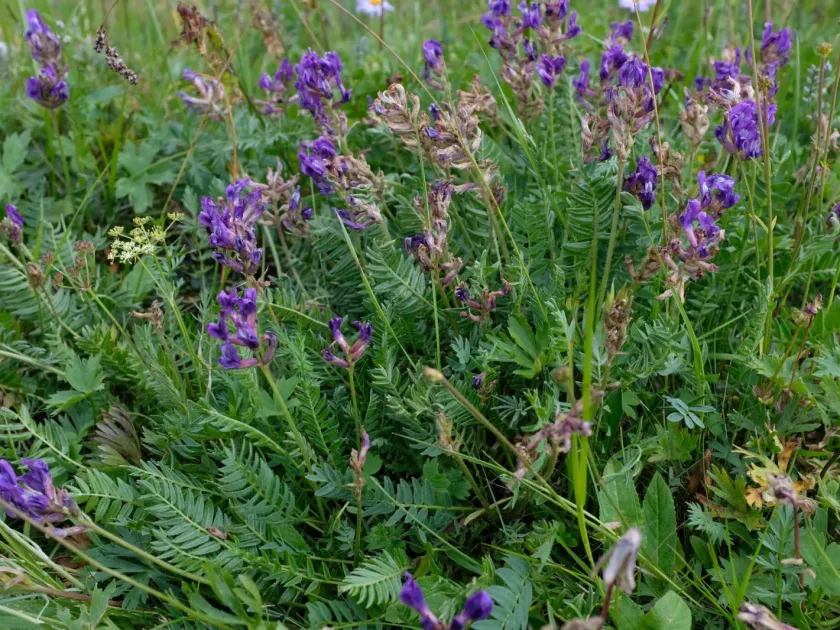
Description
Sowing dates
Alpine Oxytropis (Oxytropis alpina/albana) belongs to the Fabaceae family. In natural conditions, the plant propagates on its own, but for cultivation, seeds are sown primarily in early spring when the soil is moisture-rich after the snow melt.
The seeds have a hard seed coat, therefore, scarification or stratification of the planting material is highly recommended before sowing to improve germination rates.
The optimal sowing depth is 1–2 centimeters depending on soil texture. Deeper sowing can weaken the seedlings as the energy stored in the small seeds is limited.
For industrial or breeding purposes, a wide-row sowing method is preferred to provide plants with sufficient space and simplify maintenance during the first year of growth.
Seedlings may emerge unevenly; this is a biological adaptation to the harsh alpine environment, where germination is spread out to mitigate the risk of frost damage.
Growing requirements
As a typical mountain flora representative, this plant has high light requirements. It reacts negatively to shading and demands open, well-warmed areas for healthy development.
Alpine Oxytropis has moderate soil fertility requirements, but good drainage is critical. Waterlogging in the root zone is fatal as it triggers root rot in the deep taproot system.
The ideal soil types are rocky, sandy loam, or light loam with a neutral to slightly alkaline pH. Growth is significantly retarded in acidic soils.
The crop exhibits high winter hardiness and the ability to withstand extreme temperature fluctuations typical of alpine belts, making it promising for extreme agricultural conditions.
The plant requires moderate moisture during the active growing season but is remarkably drought-tolerant due to its deep taproot, which can access moisture from lower soil layers.
Yield
The agricultural use of Alpine Oxytropis as a forage crop is limited by its lower growth intensity compared to standard forage legumes like alfalfa or clover.
Its primary use is for pasture improvement in high-altitude regions where other forage species fail to survive due to severe climatic constraints.
The green mass of Alpine Oxytropis is highly nutritious, containing significant amounts of protein and minerals necessary for ruminant animals in grazing conditions.
Yield per unit area under intensive management is low; therefore, the crop is typically utilized as a component of grass mixtures to increase the resilience of pasture ecosystems.
A crucial aspect is the plant's ability for nitrogen fixation through symbiosis with nodule bacteria, making it valuable for restoring soil fertility on eroded slopes.
Main diseases and pests
The main threats to Alpine Oxytropis stands are fungal diseases of the root system, which arise primarily from improper water management and soil saturation.
Pests, such as nodule weevils, can cause significant damage to young plants by feeding on cotyledons and the growing point during the early stages of vegetation.
The plant is susceptible to powdery mildew during abnormally hot and humid summers, requiring prophylactic fungicide treatments if grown in mass production.
Overgrazing is the primary anthropogenic factor leading to the degradation of Alpine Oxytropis patches, as constant removal of the aerial part depletes root energy reserves.
To protect the crops, it is recommended to practice proper crop rotation and avoid soil compaction, which supports healthy soil microflora and reduces the risk of disease outbreaks.
Harvesting
Harvesting the green mass for forage purposes should take place during the full flowering phase, as the plant reaches its maximum nutrient content and leafiness at this time.
When harvesting seeds, one must account for the extended maturation period of the pods. Collection is carried out selectively or when the majority of fruits turn brown to prevent seed shattering.
Drying of the cut mass should be done quickly, preferably under a canopy in natural conditions, to preserve vitamin content and prevent the development of mold.
To ensure high seed quality, thorough cleaning to remove impurities and drying to a moisture content of no more than 12–14 percent is necessary post-harvest.
Storing Alpine Oxytropis seeds requires dry, well-ventilated facilities protected from storage pests, as legume seeds are often susceptible to grain weevil infestations.