
Lapland locoweed
Oxytropis lapponica
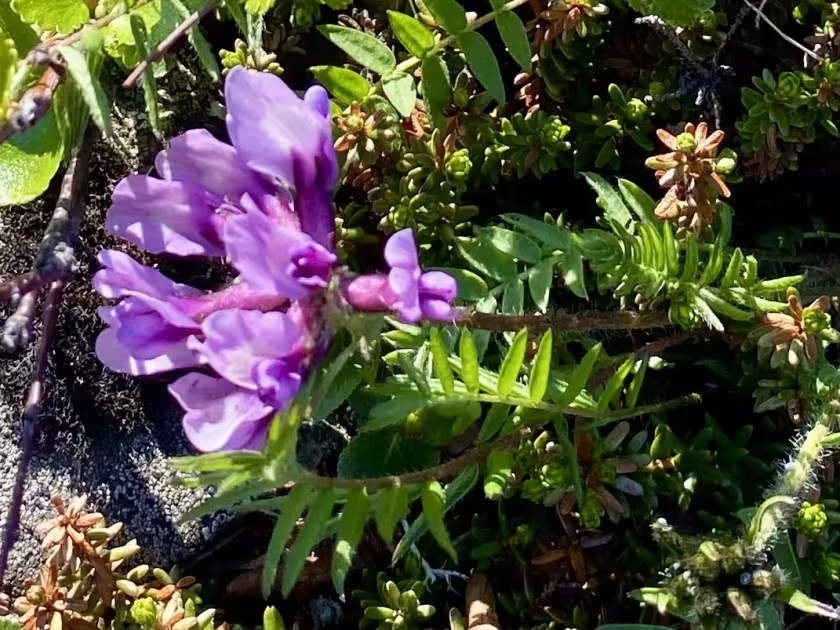
Description
Growing requirements
Lapland locoweed (Oxytropis lapponica) is a perennial legume species belonging to the Fabaceae family. It is a specialized plant, adapted to the harsh conditions of Arctic and alpine environments, exhibiting low growth and strong root development.
The native distribution covers northern regions of Eurasia, including Scandinavia, the Russian Arctic, and various high-altitude mountain ranges. It thrives in regions where growing seasons are short and environmental stress is significant.
This species requires well-drained, calcareous, or rocky soil conditions for optimal growth. It is highly sensitive to waterlogging, which can easily trigger root rot, making site selection a priority for successful cultivation or conservation.
Agricultural techniques for this plant are focused on ecological restoration. Since the plant is adapted to nutrient-poor soils, it does not require intensive fertilization, but it does benefit from light applications of minerals to support its nitrogen-fixing symbiosis.
Its primary economic use is as a tool for land restoration and the stabilization of soil in fragile ecosystems. By enriching the soil with nitrogen, it helps pave the way for secondary plant succession in degraded areas.
Main diseases and pests
Fungal diseases, particularly rusts and powdery mildew, represent the most significant threat to cultivated populations of Lapland locoweed. These diseases often emerge during damp seasons or in areas with poor air circulation.
Insects, such as seed weevils and certain larvae, can cause considerable damage to the reproductive structures of the plant. This poses a challenge for seed production, as the loss of seeds limits the plant's ability to regenerate.
Overgrazing remains a major anthropogenic threat to wild and managed populations. The slow recovery rate of the plant means that continuous grazing pressure can lead to local extirpation of the species in pasture lands.
Climate change poses a long-term risk by shifting the suitable climatic niches. As higher temperatures move north, competitors may outgrow this specialized species, displacing it from its natural habitats.
Management strategies involve monitoring the health of the stands and applying integrated pest management where necessary. Ensuring that cattle density remains low is essential for the preservation and sustainable use of this plant.