
Jacquin's oxytrope
Oxytropis jacquinii
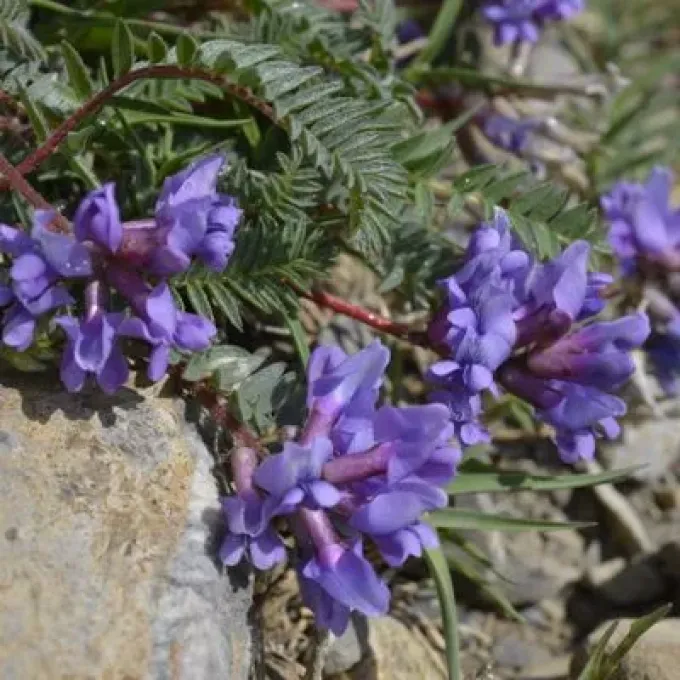
Description
Growing requirements
Jacquin's oxytrope (Oxytropis jacquinii) is a perennial herbaceous plant belonging to the Fabaceae family. It is a highly specialized species endemic to the alpine and subalpine zones of the European mountain ranges, primarily the Alps.
This species is well-adapted to extreme environmental conditions, characterized by short growing seasons, high solar radiation, and limited soil nutrients. The plant's architecture, including its rosette growth form, helps it survive heavy winds and low temperatures.
In terms of soil requirements, the plant prefers calcareous, stony, and well-drained substrates. It performs best in soils with a neutral to slightly alkaline pH, typical of limestone environments where moisture runoff is rapid and waterlogging is minimal.
The botanical structure of the plant features pinnate leaves covered with fine hairs, which is a classic adaptation for reducing transpiration loss in dry, high-altitude climates. The deep taproot system is essential for nutrient uptake and anchoring the plant on unstable mountain slopes.
Agricultural use of Oxytropis jacquinii is largely centered on its role in mountain pasture ecosystems. It contributes to soil enrichment through biological nitrogen fixation and serves as a sustainable source of biomass for grazing livestock in remote areas.
Main diseases and pests
The main biological threats to Jacquin's oxytrope include various fungal pathogens such as rusts and powdery mildew. These diseases thrive during periods of unseasonably high humidity and poor air circulation, particularly in protected or sheltered mountain basins.
Invertebrate pests, especially weevils, pose a major risk to seed production. These insects often lay eggs within the developing pods, destroying the embryos and significantly limiting the ability of the plant to regenerate naturally in the wild.
Overgrazing represents a significant threat to the survival of the species. When livestock pressure exceeds the capacity of the alpine meadow, the repeated removal of photosynthetic tissue depletes the plant's energy reserves stored in the roots.
Environmental threats also include soil erosion triggered by extreme weather events. As the soil surface is stripped away, the root systems of the plants are exposed, leading to desiccation and ultimately the death of the specimen during dry periods.
Competition from more aggressive, nitrogen-loving plant species can also suppress Jacquin's oxytrope. As soil fertility fluctuates, the plant's sensitivity to nutrient levels makes it vulnerable to encroachment by dominant meadow grasses if the habitat becomes unbalanced.