
Ormosia paraensis
Ormosia paraensis
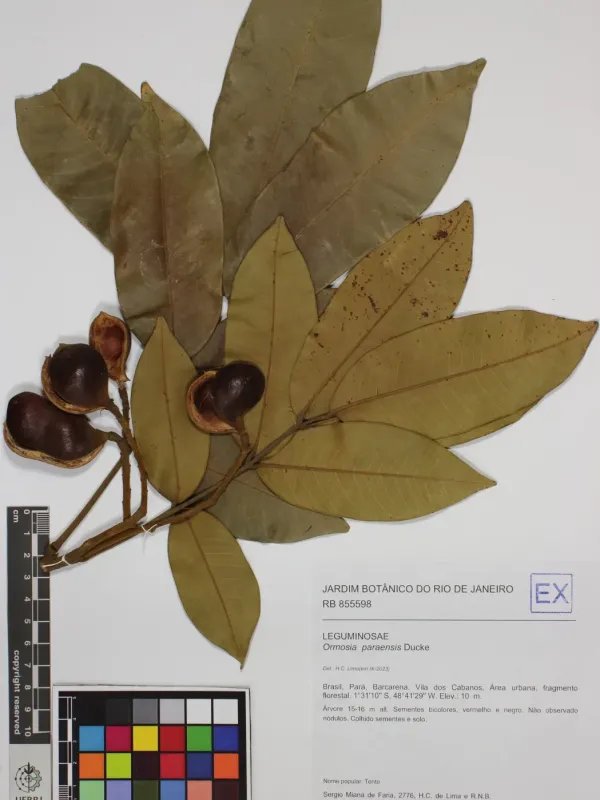
Description
Growing requirements
Ormosia paraensis is a tropical tree species belonging to the Fabaceae family. Native to the Amazon basin, this tree is well-known for its impressive size and its role in the biodiversity of tropical lowland forests.
The species thrives in deep, fertile, and well-drained soils. While it can handle periodic moisture, it prefers conditions where water does not stagnate, as it requires oxygen for healthy root development in tropical environments.
Climatic requirements for Ormosia paraensis include consistent high temperatures and high humidity throughout the year. It is strictly a tropical plant and cannot survive frost, limiting its cultivation to specific geographical zones near the equator.
Botanically, it features pinnate leaves and, like many other legumes, it possesses the capability for biological nitrogen fixation. This allows the tree to contribute to soil nutrient cycles, enhancing the fertility of the local site.
When establishing plantations, young trees need protection from intense sunlight. Providing a nursery shade environment for the first few years significantly increases survival rates and promotes stronger initial vegetative development.
Harvesting
The primary economic value of Ormosia paraensis lies in its high-quality timber. The wood is dense, durable, and highly prized for its attractive grain, which makes it an excellent choice for luxury cabinetry and decorative woodworking.
Sustainable harvesting is crucial for this species. Given its moderate growth rate, managers often implement selective logging programs to ensure that the population density remains stable over long-term forestry cycles.
Beyond timber, the seeds of Ormosia paraensis are noteworthy for their hard, red exterior, often used in jewelry or artisan crafts. This creates a secondary market and encourages the conservation of the species within local communities.
Harvesting timber requires professional equipment to handle the density of the wood. Proper seasoning is essential to prevent warping or checking, ensuring the wood remains stable for manufacturing high-end furniture items.
Seeds intended for nursery propagation must be harvested at the point of maturity. Cleaning and proper storage in a cool, dry place are necessary to maintain the viability of the seeds for future reforestation and cultivation efforts.