
Missouri evening primrose
Oenothera macrocarpa Nutt.
Description
Sowing dates
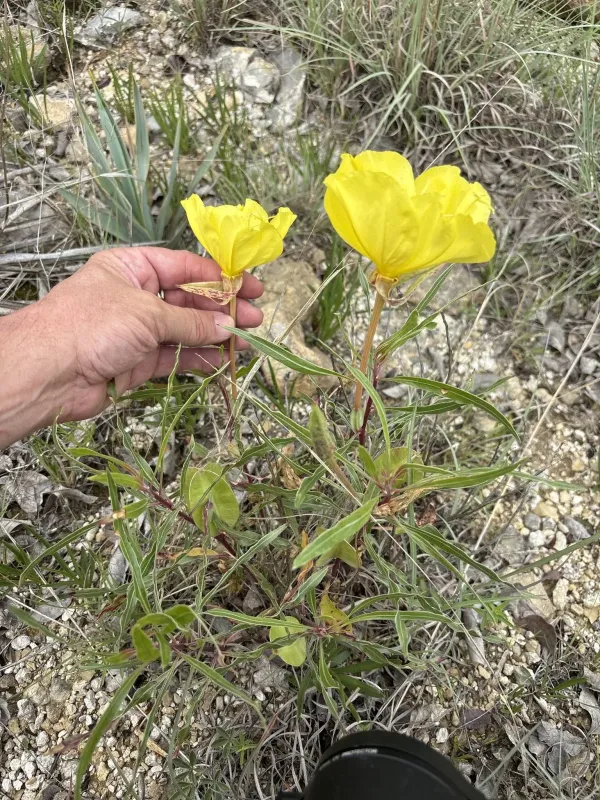
Missouri evening primrose (Oenothera macrocarpa Nutt.), a member of the Onagraceae family, is a perennial plant known for its striking, large yellow blossoms. It is a highly valued species for xeriscaping and low-maintenance gardening.
Propagation is primarily done via seeds or by dividing mature clumps in early spring or autumn. Seeds should be sown in a well-draining seed starting mix, with only a light dusting of soil as they require some light to germinate effectively.
For direct seeding, wait until the soil warms up in late spring. Keep the seedbed consistently moist until seedlings are established, though avoid waterlogging the soil, which can lead to damping-off disease in young plants.
Transplanting is best done when seedlings reach a height of 5–10 cm. Ensure they are placed in a sunny location with enough space, as the plant features a trailing habit that can spread up to 50–60 cm in diameter over time.
Once established, the plant is remarkably self-sufficient. It thrives in locations where other plants might struggle with heat and sun exposure, making it an excellent choice for rock gardens and borders.
Growing requirements
The primary requirement for this species is excellent soil drainage. It naturally occurs in rocky, limestone-rich soils of the Central United States, so amending heavy soil with grit or sand is essential for long-term health.
The plant is highly drought-tolerant once established. It flourishes in full sun, which is necessary to induce the characteristic large, bowl-shaped flowers that open in the evening and remain showy throughout the day.
While tolerant of low-fertility soils, a light application of a balanced, low-nitrogen fertilizer in early spring can encourage a more prolific display of flowers. Avoid excessive fertilization, which promotes foliage growth at the expense of floral production.
Regular weeding is important during the first year of growth to reduce competition for nutrients. Once the plant forms a mature, trailing mat, it naturally suppresses most surrounding weeds.
The species is hardy and generally requires no winter protection in temperate climates. Keeping the crown free from decaying organic matter during late autumn is the only specific maintenance task required to ensure successful overwintering.
Main diseases and pests
The most common threat to Missouri evening primrose is root rot caused by wet, poorly drained soil. Symptoms include chlorosis, wilting, and eventual death of the main taproot, which is quite sensitive to moisture.
In terms of pests, aphids can be a minor nuisance during the active blooming season. These insects often cluster around the flower buds, distorting the petals if left unmanaged.
Fungal leaf spots can occasionally occur during prolonged periods of high humidity and poor air circulation. Proper spacing between individual plants is the best preventative strategy against these environmental stressors.
- Root rot caused by heavy or wet soil.
- Aphid infestations on emerging flower buds.
- Fungal leaf spots in humid, stagnant conditions.
Managing pests usually involves manual removal or mild insecticidal soaps. If fungal issues are detected, improving drainage and thinning out surrounding vegetation is often more effective than chemical intervention.