
Drummond's evening primrose
Oenothera drummondii Hook.
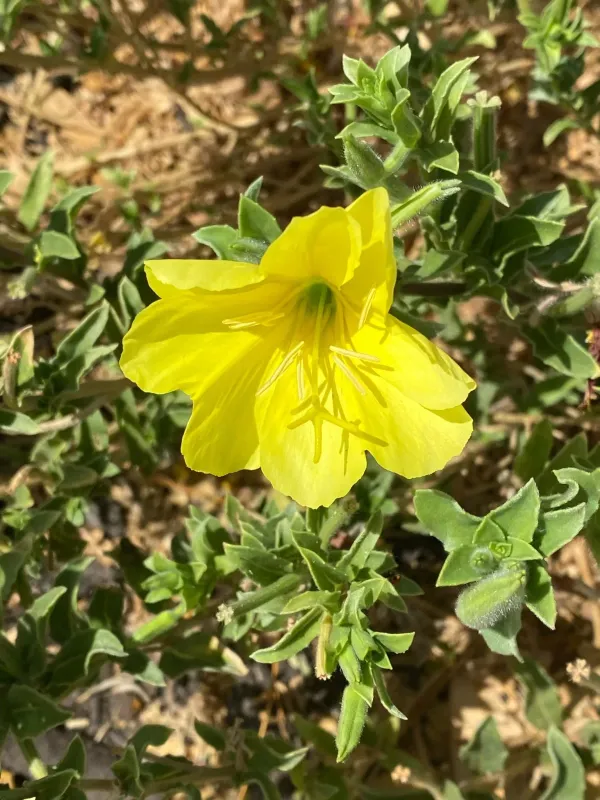
Description
Sowing dates
Drummond's evening primrose, a member of the Onagraceae family, is a coastal plant native to North America. It is typically propagated by seeds sown directly in the field once the danger of spring frost has passed and soil temperatures have reached at least 12 degrees Celsius.
When sowing, it is crucial to prepare a fine, weed-free seedbed. Because the seeds are tiny, they should be sown shallowly, ideally at a depth of no more than 0.5 to 1 centimeter, to ensure they have enough energy to emerge.
Row spacing should be maintained at approximately 30 centimeters to allow for adequate airflow between plants. Proper spacing reduces the humidity around the foliage, which is essential for preventing fungal development.
In regions with shorter growing seasons, starting seeds in greenhouses or cold frames 6 weeks before the last frost can significantly improve establishment success compared to direct seeding.
Consistency in soil moisture during the germination phase is vital. Although the plant is drought-tolerant once established, the germination stage is highly sensitive to fluctuations in water availability.
Growing requirements
This species requires full sun exposure to thrive. Its natural adaptations allow it to perform exceptionally well in bright, open environments where other plants might suffer from heat stress.
Well-drained, sandy soils are the preferred growing medium for Drummond's evening primrose. It is highly intolerant of waterlogged conditions, which lead to rapid root decay and plant mortality.
The plant demonstrates remarkable drought resistance once the root system is well-developed. It can survive on minimal supplemental irrigation, making it a sustainable choice for water-conscious landscapes.
Soil pH should ideally be between 6.0 and 7.5. Alkaline or excessively acidic soils can limit the availability of micronutrients, leading to chlorosis and stunted growth.
Fertilization should be applied sparingly. High nitrogen levels can result in excessive vegetative growth that weakens the plant structure and reduces the overall floral display.
Main diseases and pests
Root rot is the most significant pathological threat to this culture, usually associated with poor drainage or over-irrigation. Proper site selection and soil preparation are the primary defenses against this issue.
Aphids can cause substantial damage during the blooming season by congregating on the succulent buds. Regular scouting and early intervention with insecticidal soaps or biological controls are recommended.
Powdery mildew is a common fungal pathogen that appears under conditions of high humidity or poor air circulation. It manifests as a white, dusty layer on the leaves and can significantly diminish plant vigor.
Managing the plant density and ensuring sufficient spacing between individuals is a proactive strategy to mitigate the risk of disease spread.
- Implementation of proper crop rotation cycles.
- Avoidance of overhead irrigation to keep foliage dry.
- Removal and destruction of infected plant debris at the end of the season.