
Lindheimer's beeblossom
Oenothera lindheimeri (Engelm. & A. Gray) W. L. Wagner & Hoch
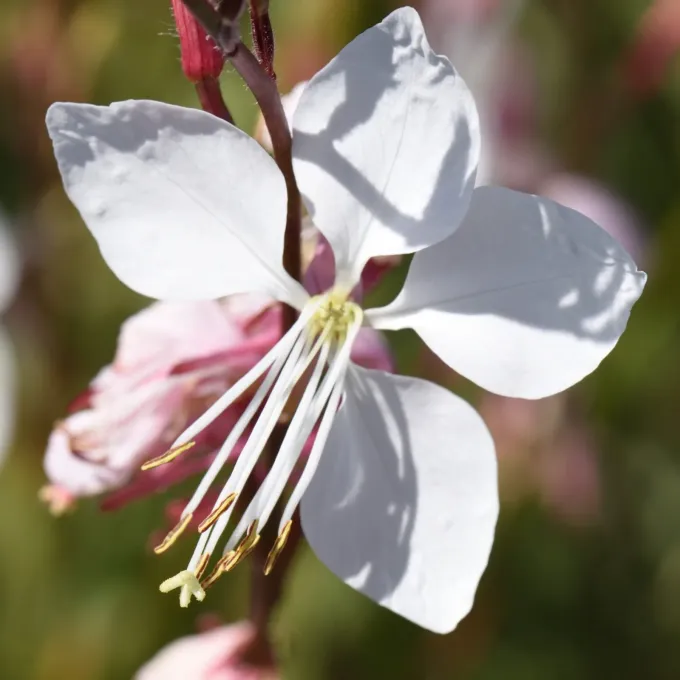
Description
Sowing dates
Lindheimer's beeblossom is typically propagated by seeds or stem cuttings. Seeds should be sown indoors in late winter or early spring in a well-draining, light potting mix to ensure early establishment.
When sowing, seeds need light to germinate, so they should be surface-sown or covered only with a very thin layer of substrate. Keep the medium consistently moist but not waterlogged until germination occurs.
Transplanting into the garden should only take place after the danger of frost has passed. Ensure the plants are spaced 40–50 cm apart to provide adequate air circulation, which is vital for plant health.
For vegetative propagation, cuttings taken in late spring from non-flowering shoots root readily in perlite or sand. This method ensures the offspring are genetically identical to the parent plant.
Seedlings develop rapidly once temperatures rise. Regular pinching of the growing tips will encourage a bushier habit and significantly increase the number of blooming stems during the growing season.
Growing requirements
Belonging to the Onagraceae family, this species is native to the prairies of Texas and Louisiana. It thrives in full sun, which is essential for its compact growth and abundant flower production.
Well-drained soil is the most important requirement for this plant. It is highly intolerant of "wet feet" and will quickly decline if grown in heavy clay soils that retain excessive moisture during winter.
The plant is naturally drought-tolerant once established due to its deep taproot system. It performs best in soils with a neutral pH, though it can tolerate a range of soil types if drainage is excellent.
Regarding climate, it is hardy in USDA zones 6 through 9. In colder regions, it is often treated as an annual or requires significant winter protection to survive the frost.
Low-fertility soil is often sufficient, as over-fertilization can result in tall, leggy plants that are prone to flopping. A balanced, slow-release fertilizer in early spring is usually sufficient.
Main diseases and pests
The primary threat to Lindheimer's beeblossom is root rot caused by poor soil drainage. If the root zone remains waterlogged, the plant becomes susceptible to various fungal pathogens that lead to sudden wilting.
Powdery mildew can appear as a white, dusty coating on the foliage during periods of high humidity or poor air circulation. Proper spacing between plants helps to mitigate this risk significantly.
Aphids are the most common insect pests, often congregating on the succulent flower spikes. Regular monitoring is necessary to keep their populations under control and prevent plant damage.
Whiteflies can also occasionally infest the plants, particularly in greenhouse or sheltered conditions. Use of insecticidal soaps or horticultural oils is effective if applied in the early stages of infestation.
Rust diseases may occur in particularly damp and stagnant environments. Sanitation practices, such as removing fallen leaves and pruning away infected stems, are essential for effective disease management.