
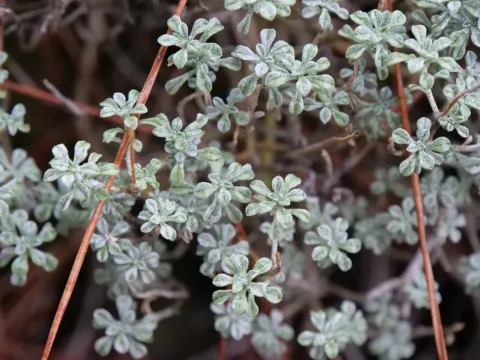
Odontarrhena
Odontarrhena
Odontarrhena is a genus of herbaceous plants belonging to the Brassicaceae family, recognized for its exceptional capability to accumulate heavy metals from soil environments.
What the section contains

Odontarrhena
The sowing process typically commences in early spring, once soil temperatures consistently exceed the minimum threshold required for successful seed germination.
Field preparation involves creating a fine tilth, which is essential for ensuring that the small seeds maintain adequate contact with the soil profile to facilitate water absorption.
Seeds should be sown at a shallow depth of 1–2 centimeters, as deeper planting significantly hinders the emergence and initial growth rates of the young seedlings.
Uniform seed distribution is managed through precision drills, maintaining optimal spacing that reduces inter-plant competition while maximizing the land's remediation capacity.
The plant thrives in regions characterized by high solar radiation, which is essential for stimulating the metabolic processes required for hyperaccumulation of metallic elements.
While the species is highly adaptable to various soil types, it performs best in well-drained, alkaline to neutral substrates that are enriched with the target metals.
Odontarrhena exhibits remarkable drought tolerance, allowing it to survive periods of moisture stress that would typically inhibit the growth of standard agricultural crops.
Soil management should avoid excessive application of nitrogenous fertilizers, as high fertility levels can sometimes suppress the natural hyperaccumulation mechanisms of the plant.
It is crucial to maintain an open field environment, as any shading or competition from invasive species can lead to a significant decline in the overall biomass and metal uptake.
The yield of Odontarrhena is measured by the total dry biomass harvested, which serves as the primary source for the subsequent recovery of accumulated mineral elements.
Maximum productivity is achieved when the crop is harvested during the peak vegetative stage, just as the plant approaches the floral initiation phase.
Yield metrics are closely monitored to assess the efficiency of the remediation process, with successful harvests yielding several tons of dry matter per hectare annually.
Consistent growth across the growing season is essential for high yields; therefore, timely maintenance and irrigation in extremely dry conditions are recommended for optimal results.
The metal concentration within the harvested plant tissues provides an indicator of the site's ongoing remediation progress and the overall effectiveness of the cultivation strategy.
The primary threats to Odontarrhena include crucifer flea beetles, which can cause significant damage to the cotyledons and early leaves, leading to reduced plant density.
In humid climates, fungal pathogens such as root rot can affect plant health, particularly in fields with poor drainage or where crop rotation practices are ignored.
Pests such as aphids may colonize the plants during the flowering phase, extracting nutrients and potentially acting as vectors for viral diseases that weaken the crop.
Management strategies focus on integrated pest control, prioritizing biological options that ensure the safety of the soil environment and maintain the purity of the biomass.
- Regular inspection of leaf health.
- Implementation of diverse crop rotation.
- Prompt removal of infected plant residues.
Harvesting is performed using mechanical harvesters that efficiently gather the aerial parts of the plants before they reach full senescence to prevent nutrient leaching.
Post-harvest management involves immediate drying of the biomass to stabilize the material and reduce the logistical burdens of transportation and storage.
The drying process is a critical stage, ensuring that the moisture content is reduced to levels that prevent biological degradation and maintain the integrity of the mineral content.
After successful drying, the biomass is often processed via incineration or chemical leaching, techniques designed to concentrate the metals from the plant ash effectively.
The final stage of the harvest cycle includes the assessment of soil samples to verify the reduction in metal toxicity and to plan subsequent cycles of hyperaccumulator planting.