
Ochna O'Connor
Ochna oconnorii
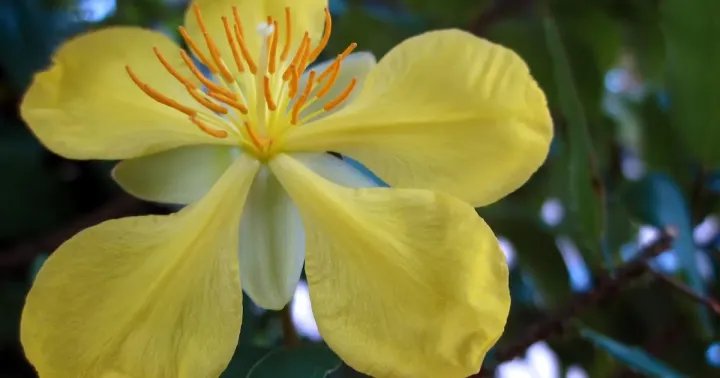
Description
Growing requirements
Ochna oconnorii, belonging to the Ochnaceae family, is a distinctive evergreen tree native to the forest regions of Southern Africa, particularly within South Africa and Zimbabwe.
This species thrives in well-drained, fertile loamy soils rich in organic matter. A key requirement for optimal growth is maintaining a soil pH ranging from neutral to slightly acidic.
As a heat-loving plant, Ochna oconnorii requires protection from frost and extreme cold. It performs best under partial sun exposure, requiring light shade during the hottest parts of the day to prevent leaf scorch.
Regular but moderate watering is essential for healthy development. During the growing season, the plant benefits from high ambient humidity, which makes it well-suited for greenhouse environments and botanical collections.
Biologically, the species is characterized by a slow growth rate, which necessitates patience when establishing it in landscaping projects or ornamental garden settings.
Harvesting
The primary economic value of Ochna oconnorii lies in ornamental horticulture. It is highly prized for its unique architectural canopy and striking floral displays, which bring an exotic aesthetic to garden designs.
While the timber of this species is occasionally used in local traditional crafts, its slow growth and conservation status prevent it from being utilized as a mass-produced industrial material.
Fruit and seed collection are typically performed manually as the seeds reach maturity. The seeds show moderate germination rates and often require pre-sowing treatments like stratification or soaking in warm water.
A significant aesthetic feature is the persistent, colorful calyx following the flowering period, which visually resembles fruit and enhances the plant's market appeal as a specimen tree or hedge plant.
Commercial propagation efforts are focused on maintaining genetic diversity, with seed stock sourced predominantly from protected natural habitats or specialized botanical nurseries.