
Ochna barbosae
Ochna barbosae
Description
Growing requirements
Ochna barbosae is an evergreen shrub or small tree belonging to the family Ochnaceae, native to the tropical forests of Southern Africa, particularly regions within Mozambique. It is highly valued for its striking ornamental fruit structure.
The plant thrives in well-draining, nutrient-rich soil that mimics the forest floor conditions of its natural habitat. It prefers a slightly acidic to neutral substrate, and maintaining consistent soil aeration is essential for preventing root-related complications.
Being a tropical species, Ochna barbosae requires significant light exposure to bloom and fruit successfully. In its native environment, it is exposed to intense sunlight, making it suitable for bright conservatories or open gardens in frost-free regions.
Water management is critical for this species. During the active growing season, it needs consistent moisture, but it must be allowed to dry slightly between waterings to ensure that the roots do not sit in saturated soil, which is prone to rot.
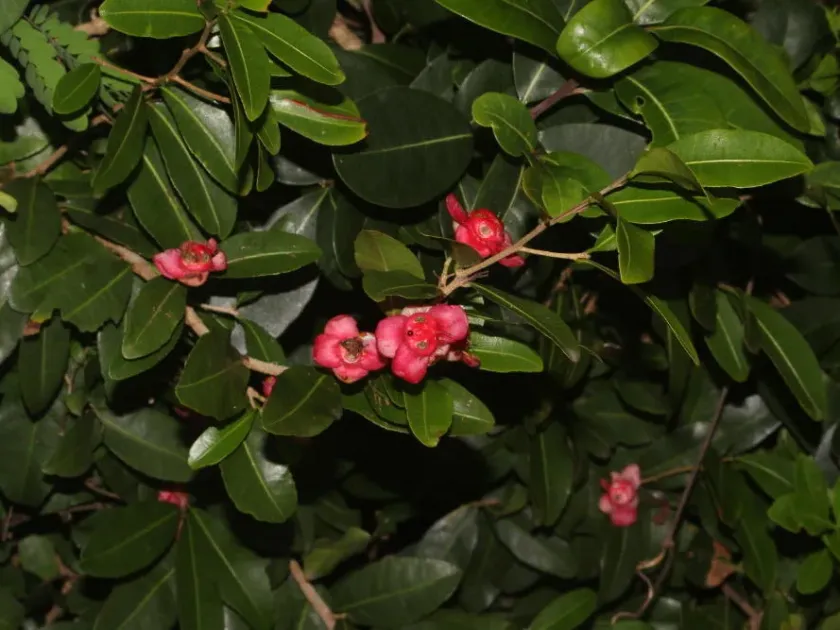
The botanical beauty of the plant lies in its unique fruiting stage. After the yellow flowers bloom and shed their petals, the receptacle turns a vivid red, holding black, drupe-like fruits, which creates a highly distinctive visual display often compared to the look of a clown face.
Main diseases and pests
The most common pests affecting Ochna barbosae in cultivation are sap-sucking insects, such as scale insects and spider mites, which can proliferate rapidly in low-humidity environments.
Fungal diseases such as root rot or leaf spot can occur if the substrate remains waterlogged for extended periods or if there is poor airflow around the foliage, especially in greenhouse conditions.
Integrated pest management, including regular inspection and the use of insecticidal soaps or horticultural oils, is recommended to keep pest populations under control without damaging the plant's delicate tissues.
Preventative measures involve ensuring the plant is positioned in a well-ventilated area and using a porous soil mix that prevents water stagnation around the base of the stem.
Strict hygiene, such as removing fallen debris from the topsoil and maintaining proper spacing between plants, is essential to mitigate the risk of pathogen transmission in enclosed growing environments.