
Ochna natalitia
Ochna natalitia
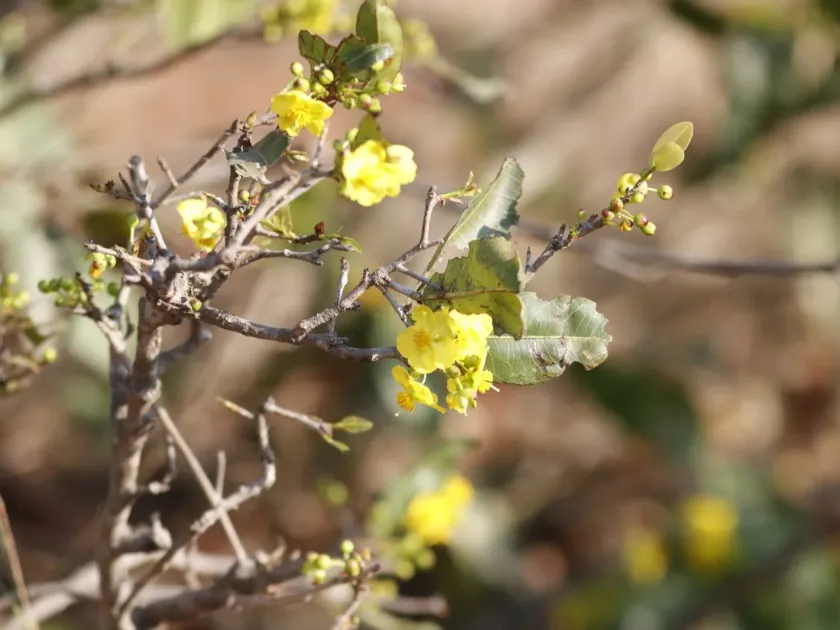
Description
Growing requirements
Ochna natalitia, commonly known as the bird's eye bush, is an evergreen shrub or small tree belonging to the Ochnaceae family. Native to the eastern parts of Southern Africa, it is widely recognized for its attractive foliage and distinct floral display that creates a vibrant garden feature.
Botanically, the plant is characterized by its stiff, glossy, leathery leaves and unique reproductive strategy. Once the yellow petals fall off, the sepals enlarge and turn a brilliant red, framing the developing black, berry-like fruits, which serves as a significant biological adaptation to attract seed dispersers.
For optimal growth, the species requires well-drained, nutrient-rich soil with a slightly acidic to neutral pH. It thrives in positions that provide bright, filtered sunlight, though established plants are capable of tolerating full sun exposure if sufficient soil moisture is maintained.
The cultural requirements include a consistent irrigation schedule during the peak growing season to ensure robust development. While the plant exhibits moderate drought tolerance once established, periodic deep watering helps in maintaining the lush green appearance of the canopy.
Maintenance practices involve periodic pruning to manage the shape and density of the shrub. This promotes better air circulation within the crown, reducing the risk of fungal issues and encouraging more prolific flowering in the subsequent seasons.
Harvesting
The primary utility of Ochna natalitia is ornamental, frequently used in landscaping as a hedge or a specimen shrub. Harvesting of mature seeds for propagation occurs after the fruits ripen to a dark black color, signaling that they are ready for collection and planting.