
Ochna lanceolata
Ochna lanceolata
Description
Growing requirements
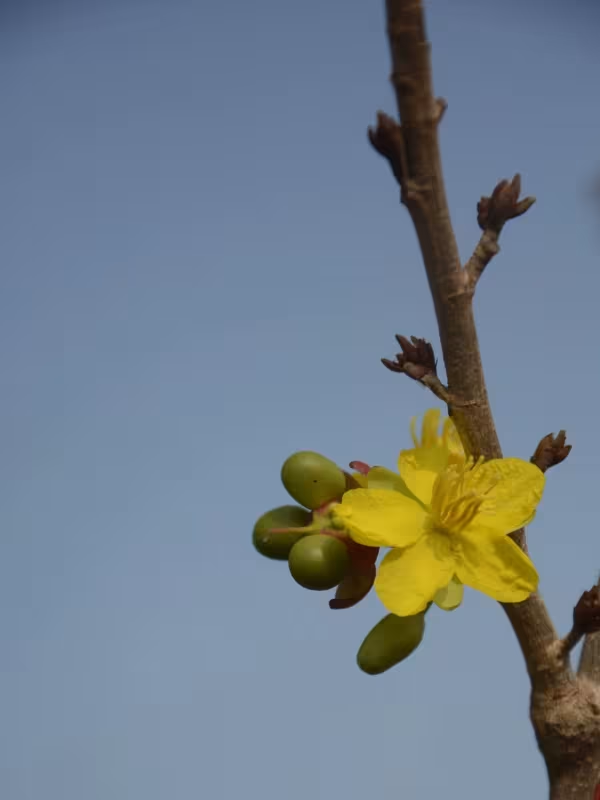
Ochna lanceolata is an evergreen shrub or small tree belonging to the Ochnaceae family. Native to tropical African regions, it is prized for its elegant foliage and unique floral display that transforms into striking dark fruits held by bright red sepals.
Climate requirements for this species are strictly tropical or subtropical. It thrives in frost-free environments where temperatures do not drop below 15 degrees Celsius. In non-tropical regions, it must be grown in greenhouses to maintain necessary warmth.
Soil conditions play a crucial role in the development of Ochna lanceolata. The plant requires a well-drained, slightly acidic to neutral substrate. Heavy soils that hold excess moisture are detrimental to the root system and must be avoided at all costs.
Agronomic management involves providing consistent moisture during the growing season while ensuring the soil is not waterlogged. Pruning is often required to maintain a compact shape and encourage denser growth if the plant is being grown for ornamental purposes.
The cultural value of this plant lies in its ornamental use in gardens and park landscaping in tropical areas. Its distinctive appearance makes it a favorite among collectors of exotic species interested in the unique morphology of the Ochnaceae family.
Main diseases and pests
Major pests that affect the health of Ochna lanceolata include spider mites and scale insects. These pests often proliferate in indoor or greenhouse settings where the air is stagnant, necessitating regular ventilation and monitoring.
Common diseases are primarily related to soil-borne pathogens, specifically root rot caused by stagnant water. Utilizing high-quality drainage materials and adjusting irrigation schedules based on ambient light levels significantly reduces the risk of such infections.