
Ochna jabotapita
Ochna jabotapita
Description
Growing requirements
Ochna jabotapita is a perennial evergreen shrub belonging to the Ochnaceae family. Native to tropical regions of Asia, specifically India and Sri Lanka, it is highly valued for its striking visual transformations during its blooming and fruiting stages. The plant typically reaches a height of several meters, assuming a graceful, bushy structure that is favored in tropical landscaping.
The cultural requirements for Ochna jabotapita center on well-draining, nutrient-rich soils with a slightly acidic pH. The plant thrives in environments that mimic its natural habitat, requiring consistent warmth and protection from frost. It demands a position with ample sunlight to encourage robust growth and the characteristic development of its red, saucer-like sepals after flowering.
Agronomic management involves regular irrigation to keep the root system moist but not waterlogged. Supplemental feeding with slow-release fertilizers during the growing season significantly enhances the vibrancy of the foliage. In regions where temperatures fall below 15 degrees Celsius, the plant must be cultivated in pots to allow for easy relocation to a protected, indoor environment during the colder months.
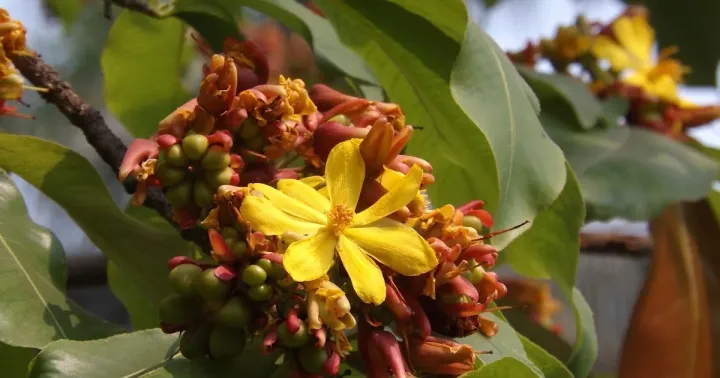
Botanically, the plant is distinguished by its yellow flowers which give way to black drupes held by persistent, bright red sepals. This unique feature often earns it the nickname of a decorative exotic shrub. The leaves are typically serrated, glossy, and leathery, providing structural interest even when the plant is not in its primary flowering season.
The primary use of Ochna jabotapita is ornamental, where it serves as a focal point in gardens, conservatory plant, or a hedge in tropical climates. While it has been historically used in traditional botanical medicine, it is not currently grown as a major agricultural crop. Its value remains high among horticulturists who specialize in rare and visually distinct tropical species.
Main diseases and pests
Pest management for Ochna jabotapita is crucial, with scale insects and mealybugs being the most persistent threats. These insects can rapidly colonize the stems and undersides of leaves, requiring prompt intervention with horticultural oils or systematic insecticides to maintain plant health. Early detection is key to preventing large-scale infestation.
Fungal issues, such as leaf spot or root rot, are commonly triggered by poor aeration or excessively humid, stagnant conditions. To mitigate these risks, it is essential to ensure adequate airflow around the plant canopy and to avoid overcrowding in greenhouse or nursery settings. Proper drainage remains the most effective defense against soil-borne pathogens.