
Nolina parryi
Nolina parryi
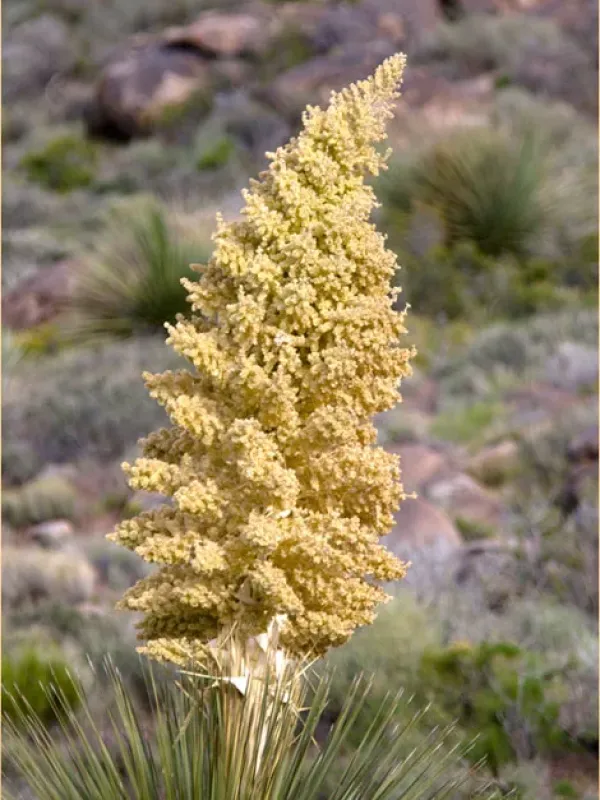
Description
Growing requirements
Nolina parryi, commonly known as Parry's beargrass, is a distinctive perennial plant belonging to the Asparagaceae family. Native to the arid regions of Southern California and Baja California, this species has evolved to thrive in rocky, desert environments with limited rainfall.
Botanically, the plant is characterized by its large, basal rosette of long, strap-like leaves with serrated margins. As the plant matures, it develops a thick, woody trunk or caudex, which acts as a primary storage organ for moisture, allowing it to withstand long periods of drought.
The cultivation of Nolina parryi requires full, intense sunlight to maintain its structural integrity and health. Inadequate light levels will lead to elongated, weak foliage and an increased susceptibility to physiological disorders and fungal infections.
Soil composition is critical for this species; it requires a porous, well-draining substrate to prevent root rot. A mixture of inorganic materials such as pumice, coarse sand, and a small portion of organic loam is typically recommended to mimic its natural, rocky habitat.
Temperature management is another key factor for successful growth. While it prefers warm, sunny days, it can tolerate some fluctuations in temperature. However, it must be protected from prolonged frost and high humidity during the winter months, which can cause significant tissue damage.
Main diseases and pests
Fungal pathogens associated with overwatering constitute the most significant threat to Nolina parryi. Root and crown rot occur rapidly when the roots are kept in saturated conditions, often leading to the collapse of the plant's structural base.
Pests that frequently target this species include spider mites, scales, and mealybugs. These insects can be particularly difficult to eradicate due to the plant's dense, fibrous leaf structure, which provides ample hiding places for colonies to develop.
Effective management includes maintaining a dry atmosphere and ensuring excellent ventilation around the plant. Avoiding overhead irrigation is a primary cultural practice to prevent the accumulation of moisture within the center of the leaf rosette, where decay often begins.
Should an infestation occur, horticultural oils or appropriate systemic insecticides should be utilized as soon as possible. Regular monitoring of the leaf bases and the underside of the foliage is necessary to detect early signs of pest activity before damage becomes severe.
Proper nutrient management also plays a role in plant health; while Nolina parryi is not a heavy feeder, an occasional application of a balanced, low-nitrogen fertilizer during the active growing season can improve its natural resistance to environmental stressors and pests.