
Nolina nelsonii
Nolina nelsonii
Description
Growing requirements
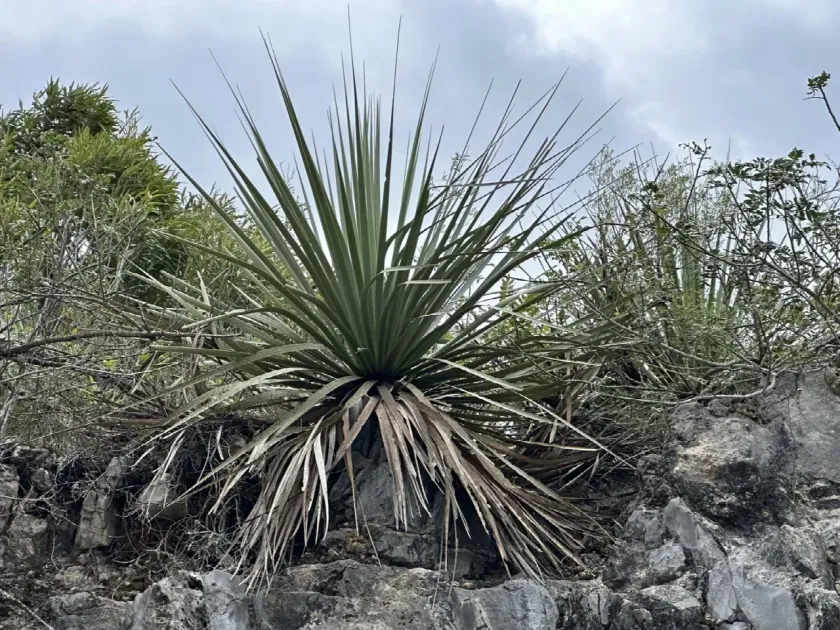
Nolina nelsonii is a distinctive arborescent succulent belonging to the Asparagaceae family. Native to the mountainous regions of northeastern Mexico, specifically the state of Tamaulipas, this plant has evolved to thrive in arid, high-altitude rocky environments where water availability is extremely limited.
The plant features a stout, slow-growing trunk topped with a dense rosette of rigid, narrow, blue-green leaves with serrated margins. As a succulent, it utilizes its trunk as a reservoir for water storage, which is a critical adaptation for survival in its natural habitat characterized by high solar radiation and low precipitation.
For successful cultivation, Nolina nelsonii requires excellent drainage and a sandy, mineral-rich substrate. It is highly photophilous and demands full sun exposure throughout the year to maintain its structural integrity and slow, dense growth habit; insufficient light often leads to leggy, unattractive foliage.
Agricultural practices for this crop focus on managing a very restricted irrigation schedule. It is moderately cold-hardy, capable of surviving light frost down to -7 to -10 degrees Celsius, provided the soil remains dry. During periods of high humidity or excessive moisture, the plant is prone to physiological stress.
Economically and horticulturally, this species is highly valued in arid-land landscaping and xeriscaping. Its sculptural, ornamental appearance makes it an ideal choice for drought-tolerant gardens, where it serves as a central architectural feature, as well as a popular choice for high-end container cultivation.
Main diseases and pests
The most significant threat to Nolina nelsonii is fungal decay resulting from waterlogging or stagnant air. Excessive moisture in the potting medium often triggers root rot and trunk decay, which can rapidly lead to the death of the specimen if not caught and corrected in the early stages.
Common pests associated with this plant include mealybugs and spider mites, which tend to infest the leaf axils, particularly in indoor environments with poor airflow. Maintaining good ventilation and routine inspections are essential management practices to keep the plant free from these invasive pests.